

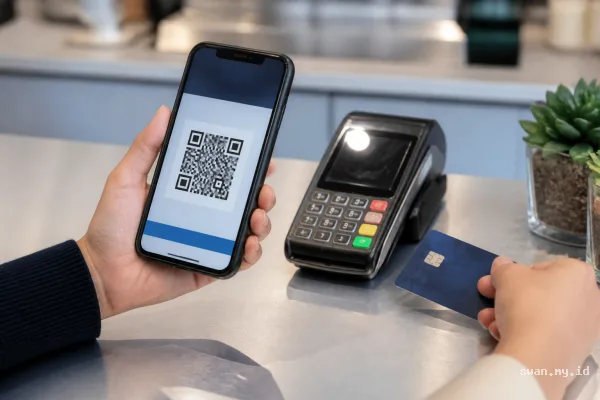
Swan.my.id - Jakarta, Bank Indonesia (BI) reports that banks have issued 32,457 Kartu Kredit Indonesia (KKI) cards since the payment product officially launched on August 17, 2026.
Deputy Governor Filianingsih Hendarta revealed the figure during a press conference on the results of BI’s Board of Governors Meeting on Wednesday, September 23, 2026. She said the KKI launch had received a positive response.
BI continues to authorize payment service providers to issue KKI cards. Consumers can apply for the card through an authorized Payment Service Provider (PJP), while each provider manages its own application, verification, approval, and activation procedures.
Eight Institutions Can Issue Kartu Kredit Indonesia
Filianingsih said seven banks currently hold BI approval to issue KKI cards. The institutions include BCA, Bank Mandiri, BNI, BRI, CIMB Niaga, Permata Bank, and Bank Mega.
In addition to those seven banks, Bank Syariah Indonesia (BSI) has received next-mover status as a PJP that can issue KKI. With this status, BSI joins the institutions that can provide the national credit card product to customers.
The approval framework allows customers to submit applications directly to the PJP that issues KKI. After that, the PJP handles the application process according to its internal procedures and policies.
How Customers Use KKI for QRIS Transactions
Customers can use KKI as a funding source for QRIS payments. First, the cardholder selects a QRIS feature in the payment application. The available options include QRIS MPM, QRIS CPM, and QRIS TAP.
Next, the user selects KKI as the funding source and completes the QRIS transaction as usual. This process connects the KKI facility with existing QRIS payment methods.
QRIS MPM allows customers to scan a QR code displayed by an offline merchant. Meanwhile, QRIS CPM enables the customer to show a payment QR code. QRIS TAP works by bringing a mobile phone close to a compatible QRIS payment terminal.
Application Process Follows Each PJP’s Policy
Although BI grants authorization to eligible providers, each PJP sets the details of its customer application process. Customers therefore need to follow the requirements and procedures established by the provider they choose.
The process covers several stages, including registration, verification, approval, and activation. These stages determine when a customer can begin using KKI after submitting an application.
BI’s latest figure shows the early adoption of KKI after its August launch. The 32,457 issued cards also reflect participation from the banks and PJP that have received authorization to offer the product.
KKI Connects Credit Cards with QRIS
KKI gives customers a credit card funding option within QRIS transactions. Users can choose among QRIS MPM, QRIS CPM, and QRIS TAP, depending on the payment method available at the merchant.
With the system, customers do not need to change the basic QRIS payment flow. They select KKI as the funding source, then complete the transaction through the chosen QRIS feature.
BI will continue to support the implementation of KKI through authorized payment service providers. For customers, the next step remains applying through an issuing PJP and following its verification and activation requirements.
