

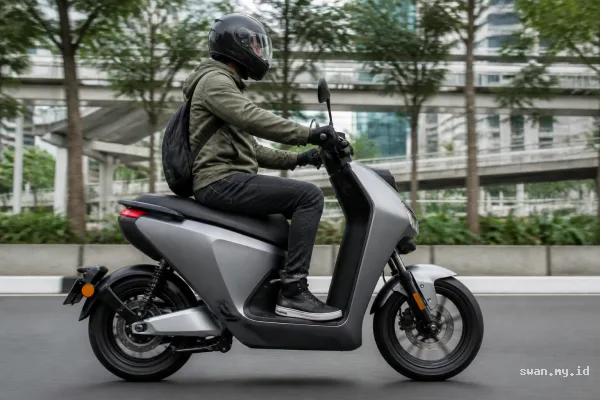
Swan.my.id - Jakarta, built-in electric motorcycle batteries offer several advantages, including better protection from theft, more stable connections, and improved resistance to water. However, this system also creates challenges when riders need to charge, inspect, or service the battery.
A built-in electric motorcycle battery sits inside the motorcycle body and does not allow users to remove it freely. Manufacturers commonly place the battery beneath the floorboard or deck. Some models place it under the seat, although that arrangement is less common.
Hernest, owner of the Battery Electric Motion (BEMo) electric motorcycle workshop, explained the benefits and limitations of this battery system. His explanation highlights the practical differences between built-in batteries and removable units.
Built-In Batteries Offer Better Protection
The enclosed position makes a built-in battery harder for other people to access or remove. Because the battery stays inside the motorcycle body, the system provides better protection against theft than a battery designed for frequent removal.
In addition, the fixed position helps maintain a more stable electrical connection. The battery socket remains firmly installed because users do not repeatedly unplug and reconnect it. Hernest said repeated installation and removal can gradually affect the connector’s function and resistance.
“The connection is certainly more stable because the socket inside a built-in battery remains solid,” Hernest said. The arrangement can reduce the risk of a loose connection during daily use.
Water Resistance and Vehicle Balance
A built-in electric motorcycle battery also benefits from the protection provided by the motorcycle’s body. The battery and its socket sit inside an enclosed area, while the surrounding structure helps shield them from water exposure.
Hernest explained that the battery receives better protection because its position and socket remain covered. The battery also has a protective wrap, which supports the overall protection of the component.
Meanwhile, the battery’s location can affect the motorcycle’s balance. Most built-in batteries sit below the floorboard, placing much of the vehicle’s weight in a lower position. As a result, the motorcycle can feel more stable while moving.
These advantages make the system suitable for riders who prioritize security, consistent connections, and stable handling. Nevertheless, the same fixed design limits flexibility in other situations.
Charging Requires the Motorcycle to Stay Near Power
The main drawback appears during charging. Since users cannot remove the battery, they must bring the motorcycle close to an electrical outlet. Riders cannot simply carry the battery indoors or charge it at another location.
“The motorcycle has to remain near the power supply when it needs charging,” Hernest said. This requirement can become inconvenient for people who live in buildings, park far from electrical outlets, or do not have a suitable charging area.
An extension cable can help when the charger cable cannot reach the outlet. However, Hernest advised users to check the cable’s current capacity before using it. The cable must suit the charging requirements to support safe operation.
Maintenance Becomes More Complicated
A built-in electric motorcycle battery also requires more work when its condition declines. If the battery drops in performance or needs charging outside the vehicle, technicians cannot remove it as easily as a removable unit.
Technicians may need to open the motorcycle body and remove several bolts before reaching the battery. The process takes more time and requires additional work compared with a battery that users can detach directly.
Maintenance can become even more involved when technicians need to check the battery or perform balancing. According to Hernest, the process may require opening the entire body section that covers the battery.
Therefore, buyers should consider their daily parking and charging conditions before choosing an electric motorcycle with a built-in battery. The system provides strong protection, stable connections, water shielding, and better weight distribution. However, riders must accept less charging flexibility and more complicated maintenance when problems occur.
