Car Radiator Fan Failure: Causes and Risks for Engine Temperature
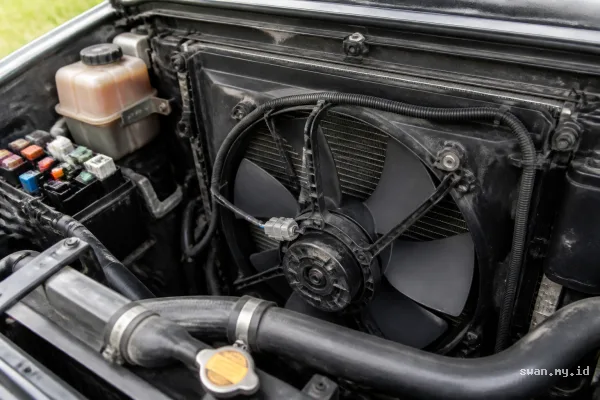
Swan.my.id - Jakarta, car radiator fan failure can directly affect engine temperature and increase the risk of overheating. The radiator fan helps cool the coolant by drawing fresh air through the radiator fins.
When the fan does not work properly, the coolant may not receive enough cooling. As a result, the engine can receive hot coolant instead of coolant that has gone through the proper cooling process.
Regular maintenance therefore needs to cover the entire cooling system. Checking the fan, wiring, safety components, and related controls can help identify problems before they affect engine performance.
How a Car Radiator Fan Works
Radiator fans generally come in two types: conventional fans and electric fans. Their main difference lies in how they operate.
A conventional radiator fan turns when the engine runs because it follows the engine’s rotation. Meanwhile, an electric fan activates when the vehicle reaches a sufficiently high temperature and requires additional cooling.
Both systems support the radiator’s function. However, each type has different components that may cause the fan to stop or operate abnormally.
Common Causes of Car Radiator Fan Failure
Broken fan belt
A broken fan belt commonly affects conventional radiator fans. This belt connects the engine’s power to the fan, allowing the fan to rotate.
The belt may break because its rubber has deteriorated with age. Exposure to hot fluids, including leaking oil or brake fluid, can also contribute to belt damage. On some vehicles, the belt may also connect to the alternator or power steering system.
Damaged viscous fan clutch
A viscous fan clutch uses oil to regulate fan speed and depends on engine rotation. When the engine temperature is low, the fan may slip and rotate more slowly. At higher temperatures, it should rotate faster.
If this component fails, the fan speed may become irregular. It may rotate quickly when the engine is cool but slowly when the engine temperature rises.
Damaged wiring or connector
Broken, worn, pinched, or damaged wiring can interrupt the electrical current that powers the fan. A damaged socket or wiring chewed by an animal can also prevent the fan from operating properly.
For that reason, the wiring and connector should be checked for visible damage and proper condition.
Blown fuse
The fuse protects the electrical circuit from excessive current. If too much electricity enters the circuit, the fuse will break and stop the current.
A blown fan fuse should not be replaced without checking the circuit first. The problem may involve a short to ground, a burned fan motor, or damaged insulation.
Faulty fan motor
A damaged cooling fan motor cannot rotate the fan according to the engine’s cooling needs. Consequently, the engine may not receive sufficient cooling.
Failed fan controller or temperature sensor
Some vehicles use a fan controller unit to regulate radiator fan speed. If the controller fails, the fan may stop working.
The coolant temperature sensor also plays an important role. It sends information to the ECU so the fan can turn on or off automatically according to the coolant temperature. If the sensor sends inaccurate information, the fan may not operate normally.
Why Early Inspection Matters
Car radiator fan failure can interfere with the cooling process and lead to engine overheating. The risk may come from mechanical components, electrical circuits, or temperature-control parts.
Because of that, inspection should cover the fan type installed in the vehicle, the fan belt, viscous fan clutch, wiring, fuse, motor, controller, and temperature sensor. Identifying the cause early can help prevent a small cooling-system fault from creating a more serious engine problem.
