DBS Indonesia Uses Component Mapping to Guide Automotive Financing in EV Shift
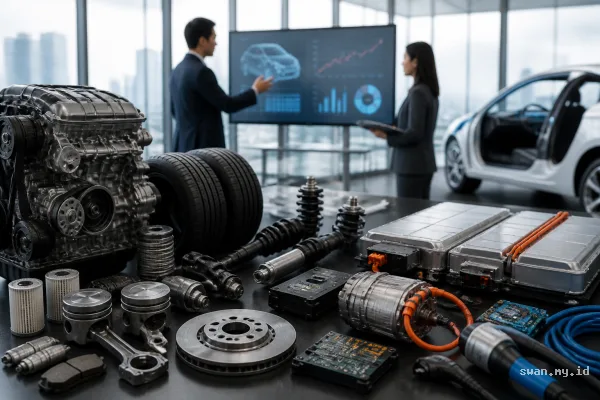
Swan.my.id - Jakarta, DBS Indonesia is using component mapping to assess automotive financing risks as the industry gradually moves from internal combustion engine vehicles to electric vehicles.
The approach focuses on companies with significant investments in internal combustion engine, or ICE, technology. At the same time, the bank considers the continued presence of ICE vehicles alongside EVs in the mass market.
Ello Hanson, Executive Director, Head of Large Corporates & ESG Lead Institutional Banking Group at Bank DBS Indonesia, explained that the bank maps vehicle components according to their use in ICE vehicles, EVs, or both types of drivetrain.
DBS Indonesia Automotive Financing Relies on Component Mapping
According to Ello, the mapping helps DBS identify components that remain relevant regardless of the vehicle technology used. These include tires, electrical components, air conditioning systems, audio equipment, and braking components.
“Our focus is on everything used in ICE and EV vehicles. For example, tires, electrical components, air conditioning, audio, and braking will continue to be used whether the vehicle is an ICE or an EV,” Ello said.
This approach allows the bank to distinguish between businesses exposed exclusively to ICE technology and companies whose products can serve both ICE and EV manufacturers. The distinction supports the bank’s assessment of financing risks during the transition.
ICE-Focused Companies Are Not Automatically Considered Unviable
Ello said companies concentrated solely on the ICE segment are not automatically considered to have poor prospects. However, DBS will apply additional caution when providing financing to businesses that remain heavily dependent on ICE-related activities.
He noted that the ICE market remains large and is expected to continue for a long time. Mass consumption patterns have not fully shifted to EVs, creating a period in which both technologies will remain present.
“We are dealing with mass consumption. ICE and EV will continue to coexist for a long time,” Ello said. He added that the ICE market could experience consolidation, with stronger players likely to remain in the industry.
Bank Encourages Automotive Companies to Adapt
Rather than simply restricting financing, DBS is also encouraging ICE-focused companies to begin adapting to the industry’s changing direction. The bank plans to use its component mapping and its resetter-type strategy as a basis for determining future financing priorities.
This strategy gives companies room to respond to the transition without immediately abandoning their existing business segments. Components that serve both drivetrains can offer a path for automotive businesses to remain relevant as EV adoption develops.
For DBS, the assessment does not focus only on whether a company operates in the ICE or EV segment. The bank also examines how the company’s products fit into the broader automotive supply chain and whether its business can adapt to changing demand.
Financing Direction Amid Industry Transition
The automotive industry is now facing a gradual shift rather than an immediate replacement of ICE vehicles by EVs. That situation requires financial institutions to evaluate companies according to their exposure, adaptability, and role in the vehicle component ecosystem.
DBS Indonesia’s mapping approach reflects that transition. Companies serving both ICE and EV markets may retain relevance, while ICE-focused businesses face greater pressure to adjust their strategies.
As the two technologies continue to coexist, the bank’s financing direction will consider both current market conditions and the ability of automotive companies to prepare for future changes.
