

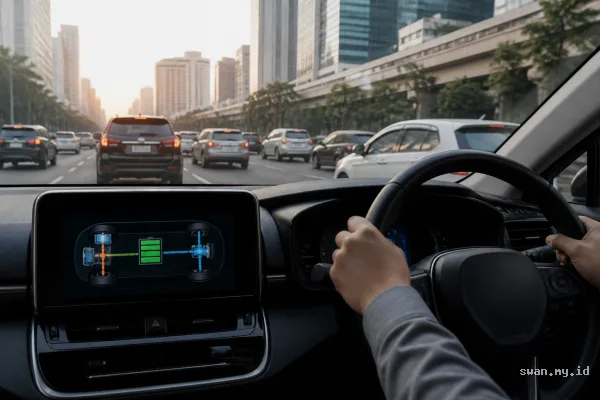
Swan.my.id - Jakarta, hybrid fuel-saving driving tips can help drivers use a vehicle’s electric system more effectively during daily journeys. Small changes in acceleration, braking, and speed management can support better fuel efficiency.
Hybrid vehicles combine a gasoline engine with an electric motor and battery. However, the technology works most efficiently when drivers adjust their habits to support electric assistance and energy recovery.
Several techniques can be applied on city roads, in heavy traffic, and on highways. The most important habits include smooth acceleration, gradual braking, and careful use of available driving modes.
Start With Smooth Acceleration
Press the accelerator gently when moving away from a complete stop. Gradual acceleration gives the electric motor an opportunity to provide the initial push without immediately forcing the gasoline engine to work harder.
A light and progressive pedal input can be especially useful in stop-and-go traffic. Avoiding sudden bursts of acceleration also helps reduce unnecessary fuel consumption during repeated starts.
Use Regenerative Braking Effectively
Regenerative braking can convert some of the vehicle’s kinetic energy during deceleration into electrical energy for the battery. Drivers can support this process by beginning to slow down earlier and applying the brake pedal smoothly.
When approaching a red light, intersection, or slowing traffic, maintain a safe distance and reduce speed gradually. Sudden braking may turn more energy into heat through the brake components instead of allowing the system to recover it.
Take Advantage of EV Mode in Heavy Traffic
EV mode can be useful when traffic becomes extremely congested and vehicles move slowly. The guidance recommends using this mode when appropriate, allowing the car to operate with electric power without burning gasoline under 40 km/h.
Drivers should still monitor traffic conditions and the vehicle’s system indicators. EV operation depends on the car’s available battery charge and operating conditions, so the mode may not remain active at all times.
Maintain a Steady Speed
On open and level roads, drivers can use a pulse-and-glide technique. The vehicle first reaches the desired speed, then the accelerator input is eased to let momentum help maintain movement with light electric assistance.
This approach works best on roads with limited traffic. On highways, maintaining a stable speed between 60 and 80 km/h can support economical driving, while cruise control may help keep the vehicle’s speed consistent.
Monitor the Energy-Flow Display
The energy-flow display on the dashboard shows how power moves between the battery, electric motor, and gasoline engine. Watching this indicator can help drivers understand which pedal inputs produce more efficient operation.
Staying within the vehicle’s eco zone can gradually build more economical driving habits. Nevertheless, drivers should keep their attention on the road and treat the display as a secondary guide.
Why Driving Style Matters
Aggressive acceleration can keep the gasoline engine running more often and place additional stress on the vehicle. By contrast, smoother inputs may also reduce wear on braking components and limit unnecessary strain on the engine and suspension.
For daily use, the most practical combination is gradual acceleration and gentle regenerative braking. EV mode can then complement those habits during slow urban traffic, while steady cruising supports efficiency on open roads.
Frequently Asked Questions
What is the most effective technique in traffic jams?
Use EV mode when suitable and accelerate gently so the vehicle can rely more on battery power during slow movement.
Can cruise control help reduce fuel use?
Cruise control can help maintain a stable speed in suitable road conditions, which may prevent unnecessary changes in engine and power demand.
Why should drivers avoid sudden braking?
Sudden braking can send more kinetic energy into heat through the brakes instead of allowing the regenerative system to recover part of it.
With consistent practice, these hybrid fuel-saving driving tips can make daily driving smoother and help drivers use the vehicle’s electric and gasoline systems more efficiently.
