

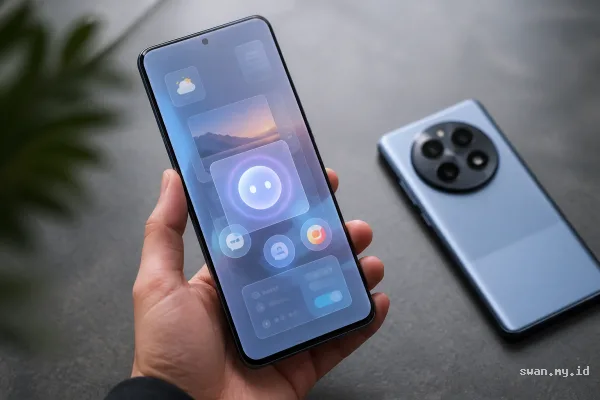
Swan.my.id - Jakarta, Xiaomi has officially launched HyperOS 4, its latest major interface update for smartphones. The system introduces a sweeping visual redesign, deeper artificial intelligence integration, performance improvements, a more flexible lock screen, and cross-device connectivity features.
The update targets users of Xiaomi, Redmi, and POCO devices around the world. However, some visual effects and performance benefits will depend on the hardware inside each device. Xiaomi highlights five major changes that define the latest version of its mobile operating system.
HyperOS 4 Xiaomi arrives as competition among mobile platforms increasingly focuses on artificial intelligence. Besides changing the appearance of the interface, Xiaomi also wants its software to understand user context and handle more tasks across different applications.
Soft Light Glass Refreshes the Interface
The most visible change comes from Soft Light Glass, a design language inspired by liquid glass. This visual system creates dynamic glass refraction, layered cards, and translucent blur effects throughout the interface.
Xiaomi applies the new appearance to the lock screen, home screen, application icons, Control Center, folders, and widgets. As a result, the system presents a more dimensional look across several parts of daily navigation.
Most devices that support HyperOS 4 will receive the updated design. However, Xiaomi says the most complete integration and optimal performance will appear on flagship devices powered by chipsets such as Snapdragon 8 Elite, Dimensity 9500, Xring O1, or newer processors.
Super XiaoAi 2.0 Adds Deeper AI Functions
HyperOS 4 also introduces a deeper integration for Super XiaoAi 2.0, Xiaomi’s digital assistant. The assistant uses Xiaomi’s MiMo V2.5 large language model and gains improved long-term memory, cross-application task execution, and screen context understanding.
Its Expert Mode can handle complex, multi-step commands. For example, the assistant can use a user’s personal preferences and calendar agenda to plan a holiday schedule. It can also create research reports, PowerPoint presentations, websites, and videos from a single text prompt.
Another feature, called Inspiration Ball, analyzes screen content in real time. It can then suggest relevant actions, such as opening map directions, creating a calendar agenda, or finding a shopping link.
Several built-in applications also receive AI-based upgrades. Recorder can identify meeting scenarios, extract key points, and create summaries automatically. Meanwhile, AI Voice Notes can generate conclusions and to-do lists from attached images. Super XiaoAi Keyboard also adds a feature that improves voice input.
Performance Improvements Focus on Daily Responsiveness
Behind the new interface, Xiaomi has redesigned parts of the system architecture. A new AI-based memory preloading system learns usage patterns and loads frequently accessed application assets earlier.
Xiaomi claims this approach increases memory availability by 27.2 percent and accelerates application launch times by 17 percent after extended use. In addition, improvements to the HyperCore engine reduce unnecessary CPU instructions by up to 14.4 percent compared with HyperOS 3.
The company also reports a 90 percent smoother Gallery experience. The Camera application’s cold startup time drops by 200 milliseconds, while HDR photo processing takes 240 milliseconds.
Lock Screen Gets Flexible Layouts and Spatial Effects
HyperOS 4 brings a complete redesign to the lock screen. Alongside the Soft Light Glass effect, users can adjust the clock layout more freely. They can stretch, resize, and move the clock numbers or text across the screen.
Xiaomi also replaces the previous crowded notification arrangement with a cleaner vertical stack. In addition, a spatial depth effect separates the photo subject, text, date, and clock. The system can then place these elements around the foreground object for a more layered appearance.
Dual-Phone Syncing Connects Two Devices
The fifth major feature is Dual-Phone Syncing. It allows two Xiaomi, Redmi, or POCO phones to share incoming calls and SMS verification codes in real time.
The feature does not require Bluetooth or the same Wi-Fi network. Instead, it uses an internet connection, allowing both phones to remain connected even when they use different mobile service providers.
Users must sign in to the same Xiaomi account on both devices. The receiving phone must run HyperOS 4, while the sending phone needs at least HyperOS 3.
For now, Dual-Phone Syncing remains limited to China. Xiaomi reportedly plans to expand the feature to global markets soon. Users who have not received the update can check their device software notifications regularly as the rollout continues.
