OpenAI AI Chip Development Gains Samsung’s Support on HBM Supply
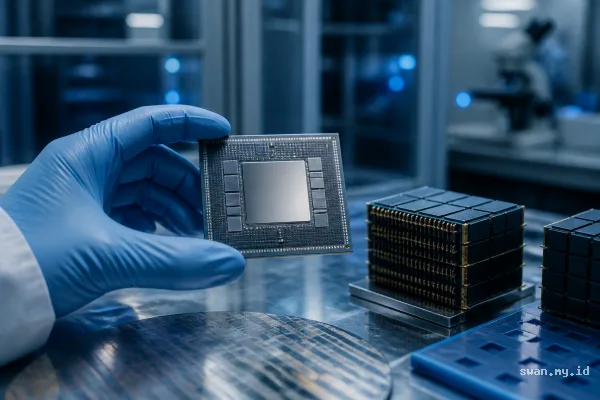
Swan.my.id - Jakarta, OpenAI and Samsung Electronics are strengthening cooperation on next-generation artificial intelligence chip development, with high-bandwidth memory (HBM) supply emerging as a key focus.
The cooperation comes as OpenAI develops its own AI accelerators to meet the company’s growing computing requirements. Because OpenAI does not operate its own chip manufacturing facilities, it must rely on external partners to produce the components and chips it designs.
Samsung could therefore play an important role in OpenAI’s AI chip supply chain, particularly by providing HBM memory for future accelerator products.
OpenAI AI Chip Development Includes Joint Research
Harrison Kim, General Manager of OpenAI Korea, previously said OpenAI and Samsung had made progress in joint production and research for next-generation chips.
“One area where we have gained broad recognition together with Samsung Electronics is the joint production and research for the chip we are developing,” Kim said, as quoted by Reuters.
However, OpenAI clarified that Kim’s statement did not refer to a new agreement. An OpenAI spokesperson said the comments concerned an existing relationship between the two companies that has continued since last year.
The relationship includes Samsung Electronics’ use of ChatGPT and a Letter of Intent announced in October 2025. OpenAI’s clarification indicates that the latest comments reflect ongoing cooperation rather than the announcement of a separate deal.
HBM Becomes Important for OpenAI’s Accelerators
HBM is widely used in AI accelerators because it provides high bandwidth for processing large amounts of data. This capability makes the memory type important for advanced chips designed to handle demanding AI workloads.
Large-scale HBM production is currently dominated by three major manufacturers: Samsung Electronics, SK Hynix, and Micron. As demand for next-generation AI chips rises, securing memory supplies has become a major challenge for companies developing their own accelerators.
For OpenAI, securing HBM early could help support the development and production of future chip generations. The company must coordinate with manufacturing and memory partners because it does not have its own fabrication facilities.
Jalapeno and the Potential Habanero Successor
OpenAI previously introduced its first-generation AI accelerator, known as “Jalapeno.” The chip uses HBM4, a memory standard also used in several newer AI accelerators from Nvidia and AMD.
For its next-generation chip, temporarily referred to as “Habanero,” OpenAI could potentially use HBM4E technology. This memory technology offers higher speeds, although the company’s plan remains a possibility rather than a confirmed production decision.
If the plan moves forward, OpenAI will need to ensure memory availability from the early stages of development. Samsung’s position as one of the leading HBM manufacturers could make it an important partner as OpenAI works to build its accelerator platform.
The cooperation also highlights the broader supply-chain pressure surrounding AI hardware. Chip designers need advanced processors, specialized memory, and manufacturing capacity at the same time. As a result, partnerships with established semiconductor companies may become increasingly important for companies seeking to develop their own AI infrastructure.
