

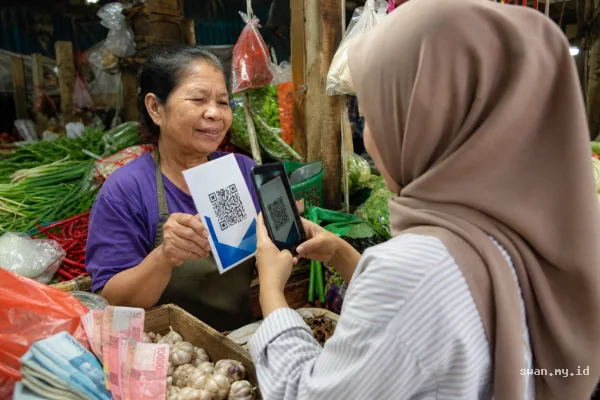
Swan.my.id - Jakarta, QRIS users reach 67 million nationwide, according to Bank Indonesia Governor Destry Damayanti. The figure represents around one-quarter of Indonesia’s total population and highlights the rapid expansion of digital payments.
Destry shared the latest figure during FEKDI x IFSE 2026 in Jakarta on Thursday, September 24, 2026. She said the growing number of users reflects a major shift in how people conduct everyday transactions.
“QRIS kalau kita lihat sekarang penggunanya sudah 67 juta. Artinya sudah 1 per 4 dari penduduk Indonesia menggunakan QRIS,” Destry said.
QRIS Adoption Reaches More Communities
The rise of QRIS has extended beyond modern shopping centers. Destry said digital payments now reach various layers of society, including small traders in traditional markets.
Many consumers consider QRIS more practical because they can complete payments through a mobile phone. As a result, they do not always need to carry physical cash when shopping.
“Kalau kita sekarang belanja di pasar itu mereka lebih suka pakai QRIS ketimbang uang cash,” she said.
This shift indicates that digital payment habits have become part of daily economic activity. Consumers can use the same payment standard in different locations, while merchants gain another option for receiving money from customers.
However, the growing use of QRIS does not mean that cash has lost its role. Bank Indonesia continues to view physical currency as an important part of the national payment system.
BI Reminds Merchants to Accept Cash
Destry reminded business owners not to reject customers who want to pay with cash. She stressed that merchants must remain ready to accept cash transactions alongside digital payments.
“Kalau pun ada yang memang mereka ingin bayar cash ya memang mereka harus bisa menerima,” Destry said.
The reminder reflects the need for balance within Indonesia’s payment ecosystem. Digital transactions offer speed and convenience, but cash remains necessary for people who do not use digital payment services or cannot access them at a particular time.
Therefore, merchants should support both payment methods. This approach allows customers to choose based on their circumstances, access to technology, and personal preferences.
Cash Circulation Continues to Grow More Slowly
The expansion of digital payments has also affected the growth of currency in circulation. Destry acknowledged that physical money continues to circulate and grow, although its pace has started to slow.
“Kalau kita lihat memang masih tumbuh, tapi mulai terus melambat,” she said.
The slowdown aligns with the wider adoption of electronic payment methods. As more people use QRIS for purchases, some transactions that previously required banknotes or coins now take place through digital channels.
Even so, the change does not eliminate the need for cash. Instead, it shows that Indonesia’s payment habits are becoming more diverse. Digital payments continue to expand, while physical currency still supports transactions in many communities.
Cash Remains Important in 3T Regions
Bank Indonesia also highlighted the continuing need for cash in the country’s frontier, outermost, and least developed regions, commonly known as 3T areas.
Several areas, particularly in island regions, still face limited telecommunications infrastructure. Some locations also experience blank spots, where residents cannot access a stable mobile signal.
“Kita ada daerah-daerah yang terdepan, terluar. Tentunya mereka juga masih butuh uang cash. Mungkin sinyal juga belum semuanya tersedia, masih ada beberapa blank spot,” Destry said.
Because of these limitations, cash remains a practical payment option for communities without reliable digital connectivity. Meanwhile, QRIS can continue to grow in areas with adequate infrastructure and broader access to mobile services.
With 67 million users, QRIS has become a major part of Indonesia’s digital payment landscape. Nevertheless, Bank Indonesia’s message remains clear: the growth of digital payments should complement cash, not eliminate access to it.
