

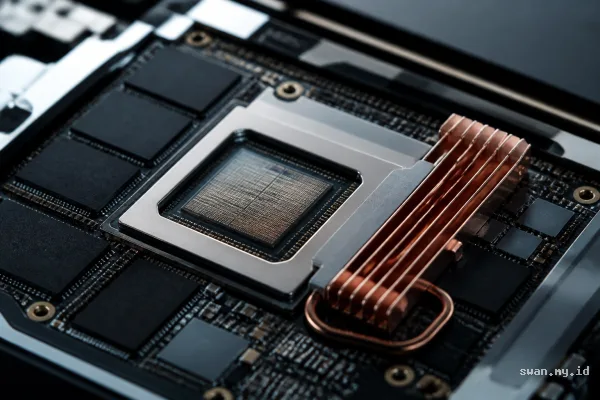
Swan.my.id - Jakarta, Qualcomm appears to be preparing a major design change for the Snapdragon 8 Elite Gen 6 Pro, with heat management becoming a key focus. A leaked photo of the chip die shows that the next-generation SoC has a much larger area than the Snapdragon 8 Elite Gen 5.
The larger layout is reportedly connected to a change in memory placement. Qualcomm is said to be moving away from the Package-on-Package, or PoP, design, in which DRAM is stacked directly above the SoC.
Instead, the DRAM may be positioned beside the SoC, allowing it to receive cooling from a heatsink. This approach uses a Heat Pass Block, or HPB, concept similar to the solution Samsung uses on the Exynos 2600.
Snapdragon 8 Elite Gen 6 Pro Focuses on Heat Control
By moving the DRAM away from the top of the SoC, the main silicon area could gain more room to release heat. This may help Qualcomm maintain higher CPU and GPU clock speeds for longer before thermal throttling occurs.
The effect could become more noticeable during extended gaming sessions or when users run demanding applications for long periods. As a result, the performance improvement may extend beyond short benchmark tests and deliver better sustained performance.
New Layout May Affect Smartphone Design
However, the proposed change could require smartphone manufacturers to redesign their motherboard layouts and internal components. The size and position of the new components would need careful adjustment so the cooling system can continue to work effectively.
A leaked die marked with the codes SM8975 and 101-BC also reportedly shows support for LPDDR5X memory rather than LPDDR6. Meanwhile, the Snapdragon 8 Elite Gen 6 Pro is expected to use TSMC’s 2nm N2P fabrication process.
Official Performance Details Are Still Unavailable
The newer manufacturing process could help reduce power consumption and heat, although Qualcomm has not yet revealed official performance figures. The actual gains in efficiency and sustained performance remain unclear.
Those details will likely depend on the first devices using the chip and their benchmark results. Until then, the leaked die provides an early indication that Qualcomm may be prioritizing thermal control alongside raw performance.
