

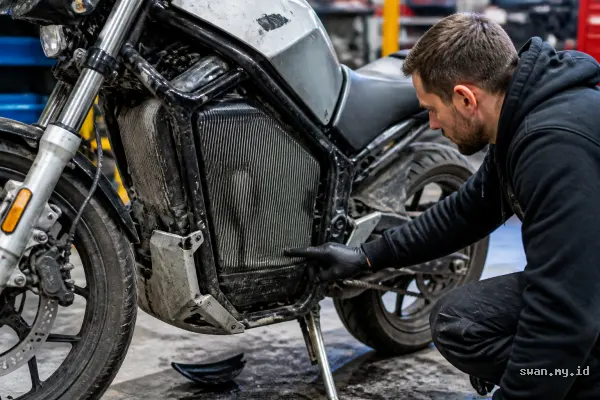
Swan.my.id - Jakarta, an electric motorcycle battery should be inspected after the vehicle is involved in a serious crash, even when the motorcycle still starts and appears to operate normally.
Abdul, owner of electric motorcycle specialist workshop Dolland Motor Electric in Bekasi, West Java, said vehicles produced according to manufacturer standards generally have protection for their batteries.
However, he emphasized that a post-crash inspection remains important. The examination should cover the battery casing and internal components before the motorcycle is used again.
Factory Protection Helps Shield the Battery
According to Abdul, electric motorcycles built to factory standards are designed with protection against impacts. One key part is the battery housing, which helps protect the cells when the vehicle experiences a collision.
He explained that the casing may use materials such as aluminum. If the housing suffers an impact, it may resist damage or become dented without immediately damaging the battery cells inside.
That protection means a collision does not automatically indicate that the battery has failed. Nevertheless, the condition of the housing still needs to be checked carefully because visible damage can provide an early indication of a more serious problem.
Why the Battery Casing Needs Attention
The battery casing serves as a physical barrier around the cells and other internal parts. After a hard impact, owners should pay attention to dents, deformation, or other changes to the housing.
Abdul also said electric motorcycles leaving the factory must meet certain protection requirements. He referred to an IP67 standard and additional anti-crash protection, while noting that the casing should use a hard case.
These design features are intended to reduce the impact of outside conditions and collisions on the battery. Still, factory protection does not remove the need for an inspection after an accident.
Do Not Rely Only on Whether the Motorcycle Starts
A motorcycle that can still power on after a crash may appear safe to ride. However, the ability to start does not by itself confirm that the battery casing, cells, or electrical system remain in proper condition.
For that reason, owners should have the motorcycle examined before returning it to daily use. The inspection should confirm that the casing has not suffered harmful damage and that the internal battery and electrical systems remain safe.
This step is especially important after a hard collision. Checking the battery first can help prevent owners from overlooking damage that is not immediately visible from the outside.
In short, factory-standard electric motorcycles have protective features designed to safeguard their batteries. Even so, a serious crash requires more than a quick test of whether the vehicle still runs.
Owners should prioritize an inspection of the battery casing and internal systems before riding again. This approach keeps the focus on the battery’s physical condition, rather than relying only on the motorcycle’s ability to turn on.
