

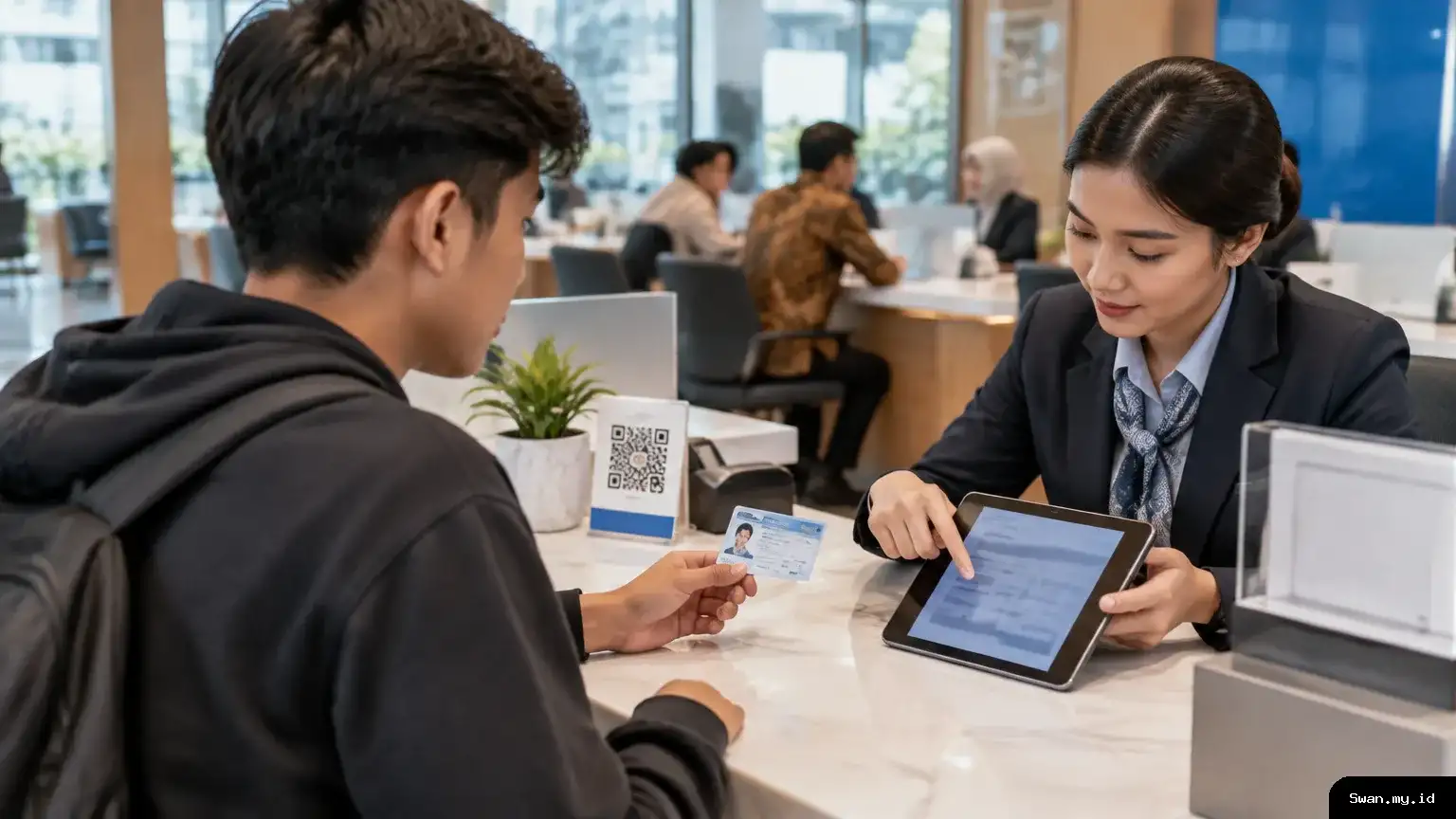
Swan.my.id - Indonesia is preparing rules for automatic bank accounts for 17-year-olds, a plan designed to connect young citizens with formal financial services as they receive national identity cards. Coordinating Economic Affairs Minister Airlangga Hartarto said the regulations are still being developed and that the initiative is included in the government’s fourth-quarter program.
The proposed accounts would be linked to each citizen’s Population Identification Number, or NIK. The government sees that connection as a way to bring identity records and banking access together, while potentially making it easier to deliver public services and payments.
Airlangga discussed the preparations with reporters at the Ali Wardhana Building in Jakarta on Tuesday, October 20. He said the government was working on the regulatory framework, but did not announce a final rule or a start date for account openings.
That distinction matters: the plan remains under preparation. The account program is not being described as a service that has already been rolled out nationwide, and its operating arrangements still depend on rules being completed.
How automatic bank accounts for 17-year-olds are planned
Under the proposed arrangement, eligible citizens would receive a bank account when they turn 17 and obtain a national identity card. The account would be connected to their NIK, creating a link between the person’s civil registration identity and a formal financial account.
BRI and Bank Syariah Indonesia, or BSI, are named as the two state-owned banks expected to provide accounts in the initial stage. The announcement does not specify how account assignment between the banks would work or whether citizens would be able to choose a provider.
The government also plans to place Rp50,000 in each automatically opened account as an initial balance. Airlangga said the money should not be reduced by administrative charges or other fees, with special rules being prepared to protect it.
Those protections are expected to be developed with Bank Indonesia and the Financial Services Authority, known as OJK. The account’s fee arrangements and other practical conditions will therefore depend on the framework the authorities ultimately establish.
Regulations will shape how the opening balance is protected
A small starting balance could help make a new account immediately usable, but only if the rules clearly prevent charges from eroding it. The government has said it intends to keep the Rp50,000 intact against fees; it has not described the balance as restricted from ordinary use.
That difference is important for future account holders and families. Protection from administrative costs is not the same as a rule that prevents a customer from spending or transferring money, and the details will need to be set out in the regulations.
Airlangga’s comments also addressed speculation about a phone giveaway accompanying the accounts. He rejected that claim, saying the government had never discussed distributing mobile phones as part of the program.
The clarification narrows the focus of the proposal to banking access and related payment services. It does not include a promised handset, and citizens should not treat claims about free phones as part of the announced plan.
Accounts could support government payments and QRIS
The accounts are intended to serve more than a savings function. Airlangga has said the system could also be used to transfer government programs, including social assistance, directly to recipients.
By connecting accounts with population data, officials aim to make public payments faster, more accurate and more efficient. The intended benefit rests on the government being able to match a recipient’s identity with the correct account and deliver funds through that channel.
The plan also includes integration with QRIS, Indonesia’s national standard for QR-code payments. Airlangga said a QR payment facility would be available automatically, linking the account initiative with everyday digital transactions.
For micro, small and medium-sized enterprises, the government says QRIS acceptance under the program would carry no merchant discount rate, or MDR. Airlangga described the arrangement as zero cost for merchants, though the policy details will depend on the rules and implementation.
The proposed fee-free QRIS access could be relevant to smaller traders who want to accept digital payments. The government has presented it as a way to encourage activity among MSMEs and support the development of the Islamic economy.
What remains uncertain before the program begins
Several implementation questions remain open. The public announcement does not set out the enrollment process, how people will receive account information, how the two banks will divide the initial group, or what services and limits each account will include.
Nor does the announcement provide a final timetable for the first account openings. Airlangga placed the regulatory work within the fourth-quarter program, but that reference concerns preparation and does not by itself confirm a launch date.
Coordination among the government, BI, OJK and the participating banks will be central to turning the proposal into a working service. The rules will need to address the protected opening balance and the relationship between identity records, bank accounts, assistance payments and QRIS access.
If implemented as described, the initiative would connect a milestone in civic life—receiving an identity card at 17—with entry into formal banking. Its broader promise is a more direct route to digital payments and government transfers, while its practical value will depend on clear safeguards and reliable access.
For now, the firmest details are the intended eligibility at age 17, the NIK link, BRI and BSI as initial providers, and a Rp50,000 balance protected from charges. The government is still preparing the regulatory framework, so further information will be needed before citizens can know exactly how the service will operate.
