

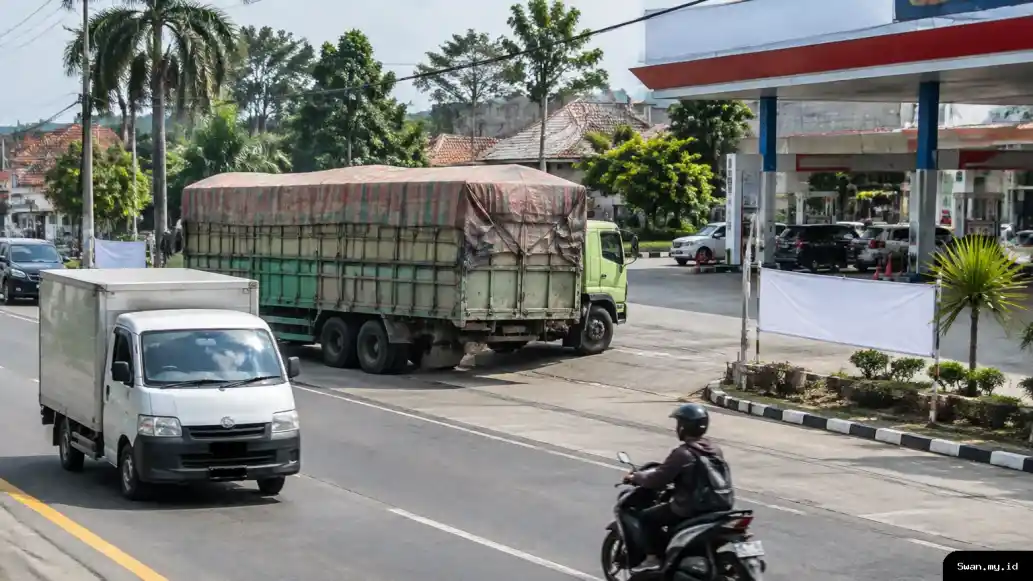
Swan.my.id - Bandarlampung truck rules are being enforced more closely, with the city’s Transportation Agency limiting where and when heavier goods vehicles may travel. The agency is also urging fuel stations within the city not to serve trucks that fall outside the permitted categories.
The measures aim to reduce traffic congestion and keep large vehicles off roads where they are not allowed. However, officials say some drivers continue to use restricted routes, making enforcement and public awareness important parts of the effort.
Bandarlampung truck rules set a weight threshold
The city’s Transportation Agency says its existing regulations distinguish between goods vehicles by weight. Vehicles with a permitted tolerance below five tonnes can operate on certain roads, while heavier trucks face limits on both their routes and operating times.
The head of the Bandarlampung Transportation Agency said the rules already establish which goods vehicles may operate within the city. He noted that the under-five-tonne threshold applies to vehicles allowed on designated roads, while larger vehicles are subject to tighter restrictions.
The agency has identified several roads where goods vehicles may travel, including Jalan Yos Sudarso, Jalan Pangeran Antasari and Jalan Pramuka. Those routes form part of the framework for directing freight traffic through the city rather than allowing unrestricted movement across urban streets.
Officials have not said that every truck may use these roads without conditions. Vehicle weight and operating limits still apply, so drivers must follow the provisions relevant to their vehicles. The named roads are permitted routes within the rules, not a general exemption for heavier trucks.
Despite the regulations, officers continue to find goods vehicles travelling outside designated routes. The agency described violations as a continuing concern and said it was carrying out enforcement. The announcement did not specify the number of violations or detail penalties for drivers who breach the restrictions.
Enforcement targets route violations and congestion
Route controls are intended to manage the presence of large vehicles in busy parts of Bandarlampung. When trucks use roads outside the designated network, they can add to congestion in areas not set aside for their movement. The agency’s response combines field enforcement with notices aimed at drivers and businesses.
That approach matters because a regulation can only guide traffic if drivers know where it applies. The city has put up banners at several locations, including near fuel stations, to communicate the restrictions. These notices are intended to reach both truck drivers and station operators.
However, signs alone do not resolve the practical pressures faced by freight drivers. The agency’s chief also acknowledged that long waits for diesel affect drivers’ working time and earnings. He said drivers need reliable access to fuel so they can return to work instead of spending hours, or potentially days, in a queue.
He linked some of the queues to government fuel-distribution policy and cautioned against placing all the blame on drivers or fuel companies. In his account, drivers are also affected when distribution arrangements leave them waiting for diesel. The issue therefore sits alongside, but is distinct from, the city’s efforts to control truck routes.
Fuel stations asked to follow vehicle restrictions
To limit the movement of heavier trucks within the city, the Transportation Agency coordinated with the traffic police and met with fuel-station operators. All operators of fuel stations in the city were invited to the meeting, according to the agency’s chief.
The agreed guidance is that city fuel stations should not serve large vehicles, except vehicles permitted under the applicable rules. The request connects fuel-station activity with the wider effort to keep restricted trucks from operating in areas where they are not allowed.
For station operators, the guidance means checking whether a vehicle is among those permitted before serving it. For drivers, it reinforces the need to understand which routes and operating conditions apply to their truck. Officials have not provided a full list of exceptions or described a separate verification procedure.
The coordination also reflects the operational challenge of regulating trucks beyond the road itself. Fuel stops can attract large vehicles and create queues, while the same vehicles may be subject to limits on where they can travel. The agency is asking station operators to support the rules as part of the city’s traffic-management effort.
What drivers and operators need to know
Goods-vehicle operators should check their vehicle’s permitted weight category and use only routes allowed under the city’s regulations. Jalan Yos Sudarso, Jalan Pangeran Antasari and Jalan Pramuka are among the identified roads, but the general restrictions on heavier vehicles still apply.
Drivers should also pay attention to posted notices, including banners near fuel stations. The city has not announced a detailed operating timetable in the information released, so drivers should not assume that a route is available at every hour. The stated rules place limits on both route and operating time for heavier vehicles.
Meanwhile, fuel-station operators have been asked to follow the agreement reached with the Transportation Agency and traffic police. They should not serve large vehicles unless those vehicles are allowed under the relevant provisions. The guidance does not remove the need for drivers to comply with road restrictions.
Bandarlampung’s measures bring road enforcement, fuel-station coordination and public notices into one effort to manage freight traffic. Their effectiveness will depend on drivers following the designated routes and operators applying the service guidance. For now, the agency says violations remain a reason for continued enforcement.
