

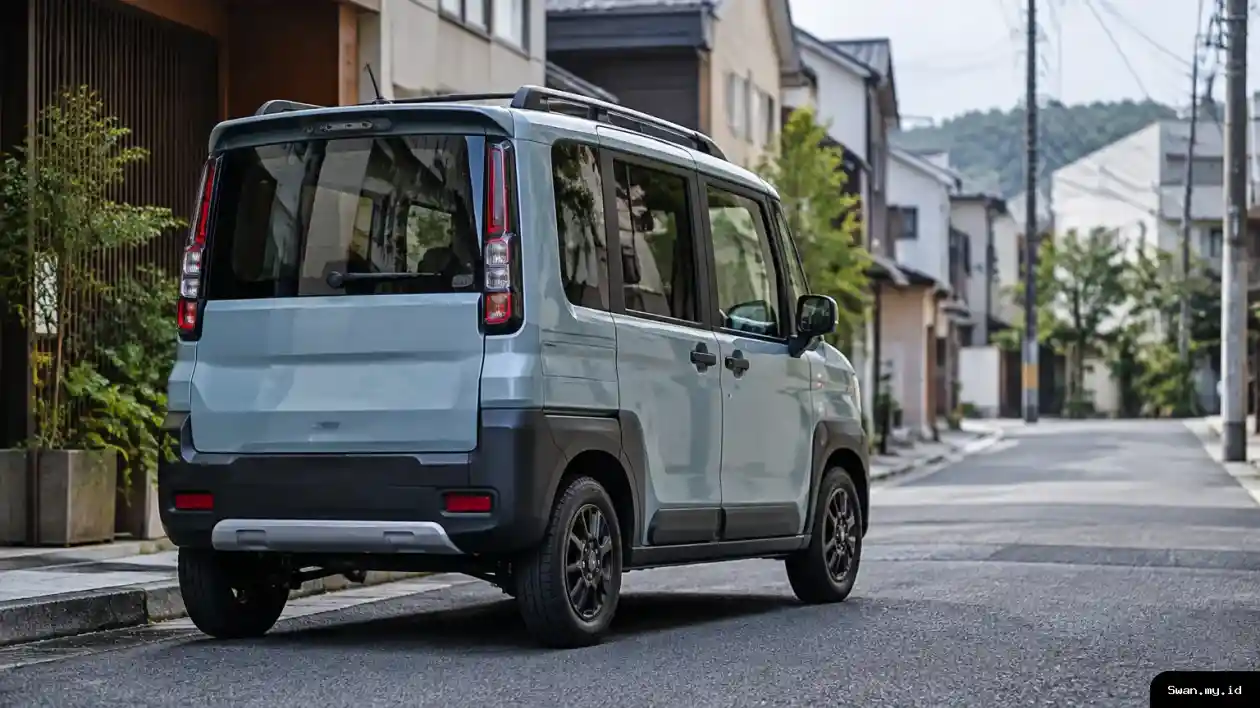
Swan.my.id - Chery Emta’s electric kei car is taking shape for Japan, where the new brand plans to launch its first model in 2027. The compact vehicle is being developed through Electric Mobility Technologies, a joint venture involving Chery and four other companies. It is intended for a market where small kei cars play a major role in everyday mobility.
The model is expected to enter a field that includes electric offerings from Nissan, Suzuki and BYD. However, Emta has not yet shared a price, technical specifications or a confirmed sales schedule. For now, a patent filing offers the clearest look at the vehicle’s developing exterior design.
What the Chery Emta electric kei car looks like
According to a report by CarNewsChina, images from a design patent show a tall, box-shaped body. That upright silhouette makes efficient use of the vehicle’s compact footprint, a practical approach for a small car intended for Japanese roads and urban settings. The patent images do not, by themselves, confirm every detail of the production model.
A sliding door at the rear is among the most distinctive features shown. This arrangement can make it easier to enter or leave the cabin in tight parking spaces, where a conventional door may have limited room to swing outward. It also gives the small vehicle a layout that differs from many familiar passenger cars.
The design appears to have changed in several areas compared with the concept version. The patent images show differences in the bumper shape and lamp placement, along with conventional door handles. These details suggest that the design has continued to develop, although the company has not announced which elements will carry through to the final vehicle.
A softroader look is also planned
Emta is also preparing a softroader-style variant. Its planned visual additions include plastic body cladding, which gives the compact car a more rugged appearance. The styling could help the model appeal to buyers who want an adventurous look in a small vehicle.
That appearance should not be confused with confirmed off-road capability. Emta has not said whether the softroader will receive changes to its suspension, ground clearance or drivetrain. It is therefore unclear whether the variant will offer improved ability on rough surfaces or focus mainly on its exterior treatment.
The distinction matters because styling alone does not establish how a vehicle performs outside paved roads. Until Emta releases more information, the softroader should be understood as a planned design option rather than a confirmed all-terrain model. The company has not detailed its mechanical differences from the standard version.
Battery, range and power remain undisclosed
Emta has not announced the car’s battery capacity, driving range or electric motor output. Those figures will help determine how the model fits into the kei car category and what kinds of daily journeys it can support. For now, buyers and prospective rivals have no official performance data to compare.
An all-wheel-drive setup using two motors has also not been confirmed. Although such a configuration could be considered for a rugged-looking variant, there is no announced specification to support that assumption. The final drivetrain, battery arrangement and charging details remain open questions.
Price information is also unavailable. Without confirmed equipment and performance figures, it is too early to assess how Emta might position the vehicle against other small electric cars in Japan. The planned 2027 launch provides a broad timeframe, but the company has not supplied a more precise date.
Five companies are behind the new brand
Electric Mobility Technologies brings together Chery Automobile, Jiangsu Yueda Automobile Group, Autobacs Seven, Gotion and Anest Iwata. Each partner contributes a different area of expertise to the venture. Together, they are working on a brand and vehicle program aimed at Japan.
Chery is set to contribute vehicle technology, including the platform, electric drive system and driver-assistance technology. Gotion is responsible for battery supply, while Autobacs Seven is expected to handle sales channels in Japan. The venture has not outlined specific responsibilities for every partner beyond these announced roles.
This structure links vehicle development with battery supply and local retail knowledge. In particular, Autobacs Seven’s planned role gives the project a partner focused on the Japanese sales market. Still, the companies have not disclosed how many Emta vehicles they expect to sell or which outlets will carry them.
More models and local production are planned
The electric kei car is only the first announced step in Emta’s product plans. The brand intends to develop three additional vehicles: a hatchback, an SUV and an MPV. No specifications, launch dates or detailed designs for those models have been announced.
Emta is also considering local production in Japan after 2030. The plan depends on how successfully its products sell, so it is not a guaranteed production commitment. If sales support the move, local manufacturing could become a later stage in the brand’s development.
For now, the 2027-targeted kei car will serve as the clearest test of Emta’s plans for the Japanese market. Its tall body, sliding rear door and proposed softroader styling point to a vehicle designed around compact dimensions and practical access. More information will be needed to judge its range, price and capabilities, but the patent design gives the emerging brand a visible starting point.
