

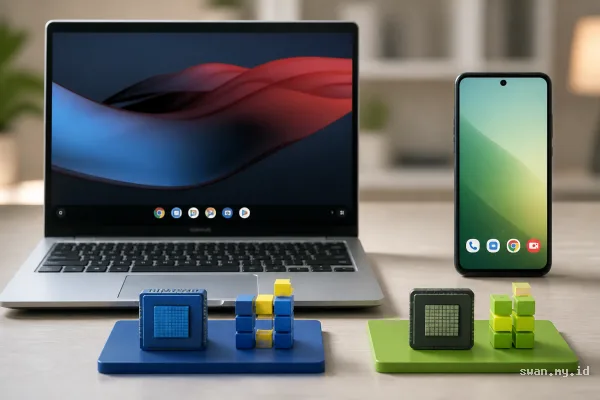
Swan.my.id - Jakarta, Google has acknowledged that some complex Android apps can encounter compatibility problems on Intel-powered Chromebooks. The company says developers may need to make further adjustments to help these apps run optimally on the laptops.
The issue concerns the different processor architectures used by many Android apps and Intel-based Chromebooks. Google says many Android apps were originally designed for Arm chips, while Intel Chromebooks use x86 processors. That difference can require additional translation before an app’s code can run on the laptop.
Google has not identified which apps are affected or detailed the specific problems users may encounter. However, the company says it is working with developers, Intel and Qualcomm to improve performance and compatibility across Chromebook devices.
Why Android apps on Intel Chromebooks can face compatibility issues
Android apps were largely developed with Arm-based processors in mind, which are common in smartphones. Intel Chromebooks, by contrast, use x86 architecture. As a result, software built for Arm may need a hardware translation layer to run on an Intel-based Chromebook.
That translation process can require additional processing power, according to Google. The company says translating Arm code in real time on an x86 system may reduce performance efficiency and use battery power more quickly. In other words, the challenge is tied to how the software’s code is adapted to the device’s processor architecture.
Apps compiled specifically for x86 do not face the same performance or battery obstacles described by Google. The distinction helps explain why the issue does not necessarily affect every Android app or every Chromebook in the same way. The company has not, however, provided a list of affected apps or explained how users can identify them.
This difference is about how an app is built and run, rather than simply whether it can be downloaded. An app may be available through the Play Store while still needing additional work to perform optimally on a particular Chromebook architecture. That distinction matters because access to an app and an optimized experience are not the same thing.
Google’s acknowledgment addresses user complaints about hardware performance. It also clarifies that Chromebook support for Android apps does not guarantee that every app will work equally well on every processor type. Compatibility can depend on whether developers have adjusted their software for the Chromebook environment and its underlying architecture.
Google is working with developers and chip companies
Google says it is collaborating with app developers, Intel and Qualcomm to improve app performance and broaden compatibility across the Chromebook range. The company did not provide a timeline for these efforts or specify which updates are planned.
The work involves more than making apps available for installation. Google says some complex applications and games still need more intensive adjustments from developers to operate optimally on Intel-based systems. Those changes are intended to address the differences between the platforms on which the apps were initially designed and the Chromebooks running them.
Developer adjustments are therefore an important part of the effort described by Google. Because applications can be designed around different processor architectures, improving the experience may require work on the software itself, alongside cooperation with chip companies. Google has not explained what specific changes developers will make, so the precise technical steps remain unclear.
Google also offers apps specifically optimized for the Chromebook ecosystem. At the same time, users can still download their preferred software from the Google Play Store, even when an app has not received Chromebook-specific optimization. This gives users access to a broader selection, although an app’s availability does not mean it has been tailored for each Chromebook configuration.
The company has not yet explained whether reported problems appear as lag, crashes, display issues or another kind of disruption. That leaves the exact user experience unclear. Google’s public comments identify the architectural gap and the need for optimization, but do not offer a full breakdown of individual symptoms.
Chromebooks use both Intel and Arm processors
The Chromebook market includes devices with different processor architectures. The information provided identifies three flagship Chromebook models using Intel Core 5 processors from Acer, ASUS and Lenovo. It also names two Arm-based variants powered by Snapdragon X Elite processors from Dell and HP.
These examples illustrate that Chromebook devices do not all rely on the same type of chip. The reported compatibility concern specifically involves complex Android apps running on Intel-based Chromebooks, while Google’s broader work aims to improve the experience across the Chromebook lineup.
The examples also show why the processor used in a Chromebook is relevant to the issue. A device using an Intel processor has an x86 architecture, while the named Snapdragon variants use Arm. Google’s comments concern the extra translation that may be needed when Arm-designed app code runs on an x86 system; they do not establish that every app will have problems on every Intel model.
Google says it plans to continue investing in system updates and gradual optimization. The company expects ongoing cooperation with hardware partners and the developer community to help make Android apps smoother, more stable and more responsive on Chromebooks over time. It has not announced a schedule for those improvements.
What users know so far
For now, Google has confirmed that some demanding Android apps may need additional work to run well on Intel Chromebooks. The company has also described why Arm-to-x86 translation can affect processing efficiency and battery use. However, it has not named the apps involved or detailed the specific faults users should expect.
Users can still install Android apps through Google Play Store, including apps without Chromebook-specific optimization. Meanwhile, Google’s collaboration with developers, Intel and Qualcomm is intended to improve compatibility. Until the company provides more detail, the scope of the issue and the timing of any improvements remain unspecified.
The main point for users is that app availability alone does not indicate how well an application will perform on every Chromebook. Google has described an architectural reason why some complex apps may require extra optimization, but it has not published an affected-app list or a schedule for changes. For now, the company’s stated response is continued work with developers and hardware partners.
