

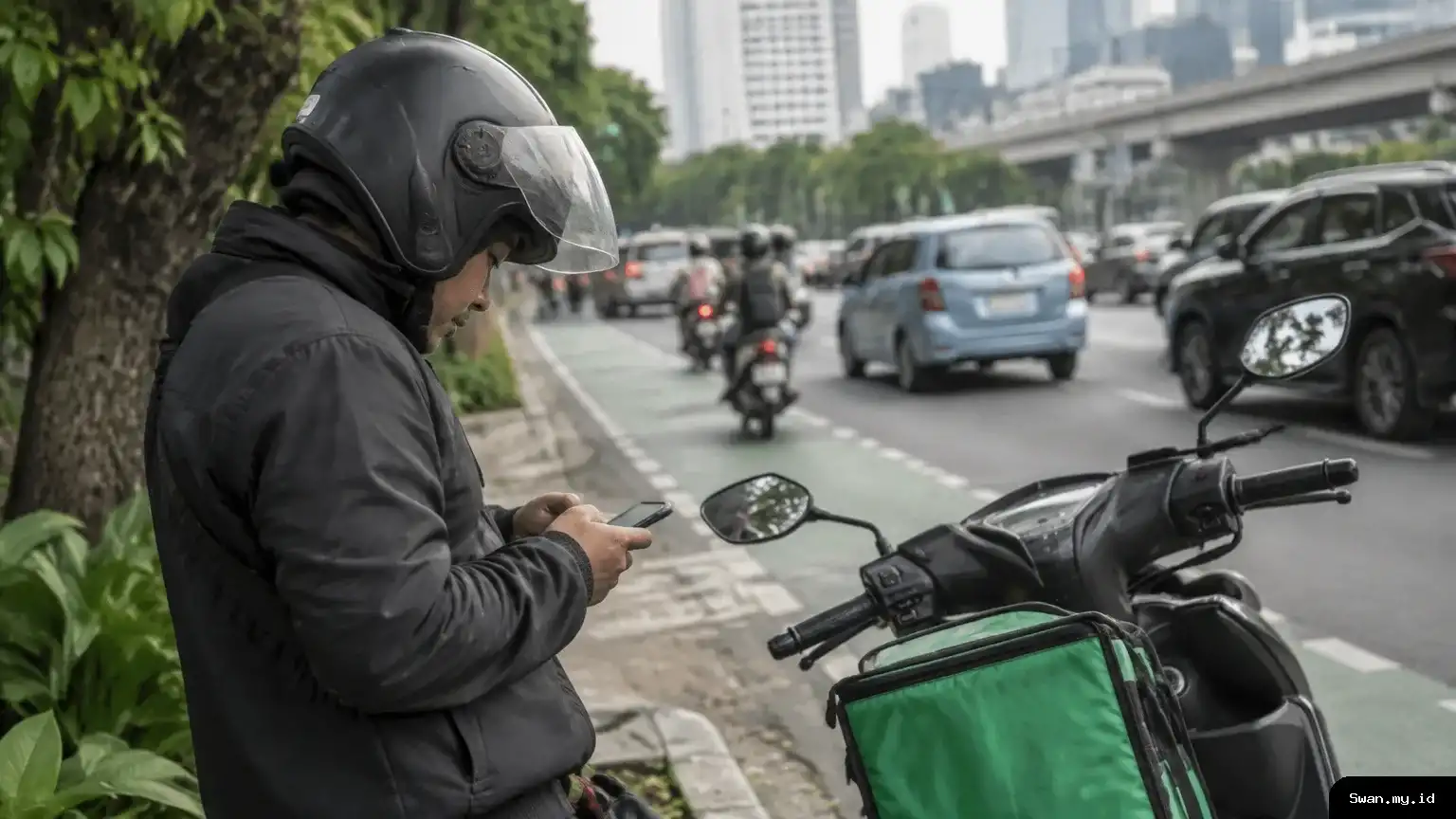
Swan.my.id - Indonesia’s 2026 ojol regulation has raised hopes among app-based motorcycle drivers, but many are waiting to see whether it will change what they take home each day. The new rules limit platform deductions, require social protection for drivers and cover goods and food delivery services. For drivers, however, a headline cap matters only if it leads to a practical improvement in their earnings and working conditions.
The government issued Presidential Regulation No. 27 of 2026 on the protection of the digital platform-based transport ecosystem on October 8. The measure brings several parts of the sector under one framework. Yet drivers say the details of implementation will determine whether its promises reach people on the road.
Indonesia’s 2026 ojol regulation sets an 8 percent cap
One of the regulation’s central provisions limits the share that an application company can deduct to a maximum of 8 percent. It also requires social protection for drivers and extends its scope to delivery services for goods and food. Together, these provisions address concerns that reach beyond passenger rides.
Fajar Hajiril, a Gojek driver who mainly carries passengers, welcomed the policy as a positive step. Still, he told Republika that a rule on paper must translate into changes on the ground. His own experience, he said, has left him feeling that his earnings remain insufficient, even when he works hard.
Fajar also questioned how much control an individual driver has over daily income. In his view, the application’s central system plays a major role in determining how many orders drivers receive and how much they earn. That leaves the 8 percent ceiling only one part of a larger calculation.
Lower fares could weaken the benefit drivers expect
Fajar’s main concern is that a smaller deduction may not produce a higher net income if passenger fares also fall. He recalled that fares had risen at one point while driver deductions were substantial, sometimes reaching 25 to 35 percent. Now, he said, the deduction may be lower, but fares have also declined.
That trade-off makes the rule’s effect difficult to judge by its percentage alone. Drivers care about the amount left after a ride, not simply the share an application retains. If a lower commission coincides with a lower fare, the change could feel modest from the driver’s perspective.
The regulation therefore puts attention on the relationship between platform deductions and the price passengers pay. A cap can set a clear limit on one charge, but drivers will still assess whether the overall payment for a trip supports their daily needs. Fajar’s account reflects that practical test: the benefit must show up in take-home earnings.
It also highlights why drivers are asking for implementation, rather than announcements alone. The regulation establishes a maximum deduction, but the material available to drivers about how that limit will affect fares and payouts remains central to their expectations. Without a visible difference in daily income, the new ceiling may not feel like a major change.
Social protection raises questions about long-term security
The regulation’s social-protection requirement is another important area for drivers. Fajar hopes that protection will include broader access to the Old-Age Security program, known as JHT, through BPJS Ketenagakerjaan. He said many drivers have so far been enrolled in Work Accident Insurance, or JKK, and Death Insurance, or JKM.
Those programs address specific risks, but Fajar sees old-age savings as a separate need. As he described it, JKK and JKM benefits become relevant in cases such as severe accidents leading to disability or a driver’s death. He said only a small share of drivers enjoy JHT and wants the government to press Gojek to make the program available more evenly.
His request points to a distinction between being covered for immediate emergencies and building financial security over time. The regulation requires social protection, while drivers such as Fajar are also looking for clarity about the protections they will actually receive. Wider access to JHT is his hope; it should not be confused with a confirmed detail of the regulation’s implementation.
Food and goods couriers are waiting for clearer details
The new rules also cover drivers who deliver food and goods, not just those who carry passengers. Hasta Mutiara Ardinda, a ShopeeFood driver who often handles deliveries, said she had heard about the regulation through social media. She knows the rules include her line of work, but said she had not received further clarity.
Her response underlines a communication challenge as the regulation reaches different types of platform work. Passenger drivers may focus on fares and deductions, while delivery couriers want to understand how the rules apply to their services. The regulation names both areas, but workers still need clear information about what will change for them.
For now, drivers’ reactions combine cautious support with unanswered questions. Fajar welcomes the 8 percent limit but wants it to improve take-home pay and social protection. Ardinda knows delivery work falls within the policy, yet is waiting for more detail.
The measure will ultimately be judged by the difference drivers can see in their daily work. That means whether deductions stay within the cap, whether earnings hold up alongside fares, and whether social protection reaches more workers. Until those outcomes become clear, the regulation offers a framework—and drivers are watching to see how it works in practice.
