

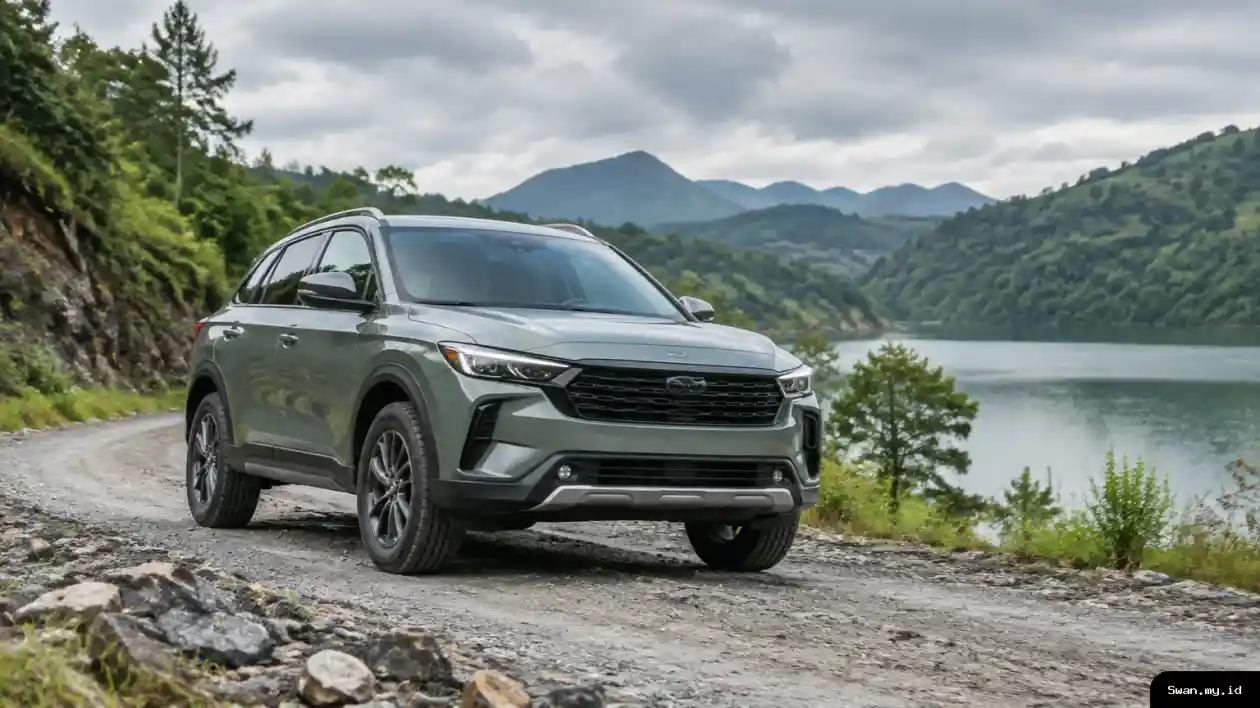
Swan.my.id - The JETOUR Travel+ ecosystem is extending the idea of a vehicle beyond the trip from one place to another. At the company’s Global Technology Experience Day 2026, JETOUR presented technology, product development and travel activities as connected parts of a broader mobility experience.
The event ran from October 20 to 23 under the theme “Future Travel Starts Now.” Activities took place in Wuhu, Anhui, and in Moganshan and Xiazhu Lake, Zhejiang, China. Together, the locations gave JETOUR a setting to show how mobility can involve both vehicle capability and experiences along the way.
Travel+ links mobility with everyday life
For many urban residents, a vehicle can serve as more than transportation. The route, the people encountered and the places explored can all become part of a journey worth sharing. JETOUR’s Travel+ concept reflects that broader view, connecting automotive innovation with lifestyle and changing mobility needs.
“JETOUR is building an approach that integrates automotive innovation with lifestyle and evolving mobility needs,” said Moch Ranggy Radiansyah, Marketing Director of PT JETOUR Sales Indonesia, in an official statement. The company sees advances in technology as one way to shape future travel experiences, rather than treating innovation as an end in itself.
That approach brings several areas into the same conversation: artificial intelligence, intelligent driving, smart cabins and AiMOGA Robotics. The event presented these as parts of JETOUR’s technology development. It did not make every feature a substitute for the basic needs of a journey, but it placed vehicle systems within a wider effort to support mobility experiences.
Intelligent four-wheel drive for varied terrain
One highlighted system was XWD Fully Automatic Intelligent 4WD. It combines four-wheel drive with 7+X driving modes and GAIA All-Terrain Intelligent Architecture. JETOUR describes the system as designed to help a vehicle handle obstacles and less accommodating road surfaces.
That capability fits the travel theme because routes do not always remain on smooth, predictable roads. A system that adjusts to different driving conditions can support drivers as they move through more varied terrain. However, the experience still depends on the route, conditions and the driver’s choices; the technology is presented as assistance, not a guarantee that every obstacle can be crossed.
The event also featured C-DM hybrid technology, which combines performance and energy efficiency for long-distance journeys. Its inclusion points to another part of the Travel+ idea: journeys should account for how a vehicle performs over distance, as well as the comfort and experiences associated with reaching a destination.
These technologies address different parts of the trip. Intelligent four-wheel drive focuses on changing terrain, while hybrid power relates to the balance between performance and energy use. Together with smart cabin and driving developments, they show how JETOUR is framing mobility as a combination of vehicle capability and the journey itself.
Conservation becomes part of the journey
JETOUR’s vision of travel also includes opportunities to encounter local environments and cultures. The company says it is developing the Travel+ ecosystem through environmental conservation initiatives and partnerships with global communities. That wider scope gives travel activities a role alongside vehicle development.
Xiazhu Lake in Zhejiang served as a setting for activities connected with the conservation of the crested ibis. Participants took part in making nests and releasing fish fry, activities intended to introduce them to ecosystem conservation through direct involvement. The programme placed attention on the natural environment encountered during travel, rather than focusing only on the vehicle used to get there.
Such activities do not replace long-term conservation work, but they can help visitors engage with the subject in a practical way. Making nests and releasing young fish gave participants a specific point of contact with the lake environment. In this way, the event linked a travel experience with awareness of local wildlife and habitat.
A broader measure of the travel experience
The Global Technology Experience Day brought these themes together across several locations. Vehicle systems, hybrid technology and conservation activities each offered a different perspective on how travel might develop. The programme’s central idea was that mobility can involve more than driving to a final destination.
That framing also reflects a shift in how automotive brands describe their relationship with customers. A vehicle remains central, but the surrounding experience can include comfort, capability, places to explore and connections with local communities. JETOUR’s Travel+ strategy seeks to bring those elements into a single ecosystem, while technology provides tools to support different kinds of journeys.
For JETOUR, the next stage of travel therefore combines practical mobility with exploration and environmental awareness. Its showcased systems address driving and energy use, while its activities at Xiazhu Lake introduced participants to conservation. Whether on a challenging road or beside a protected habitat, the company is positioning the journey itself as an important part of the destination.
