

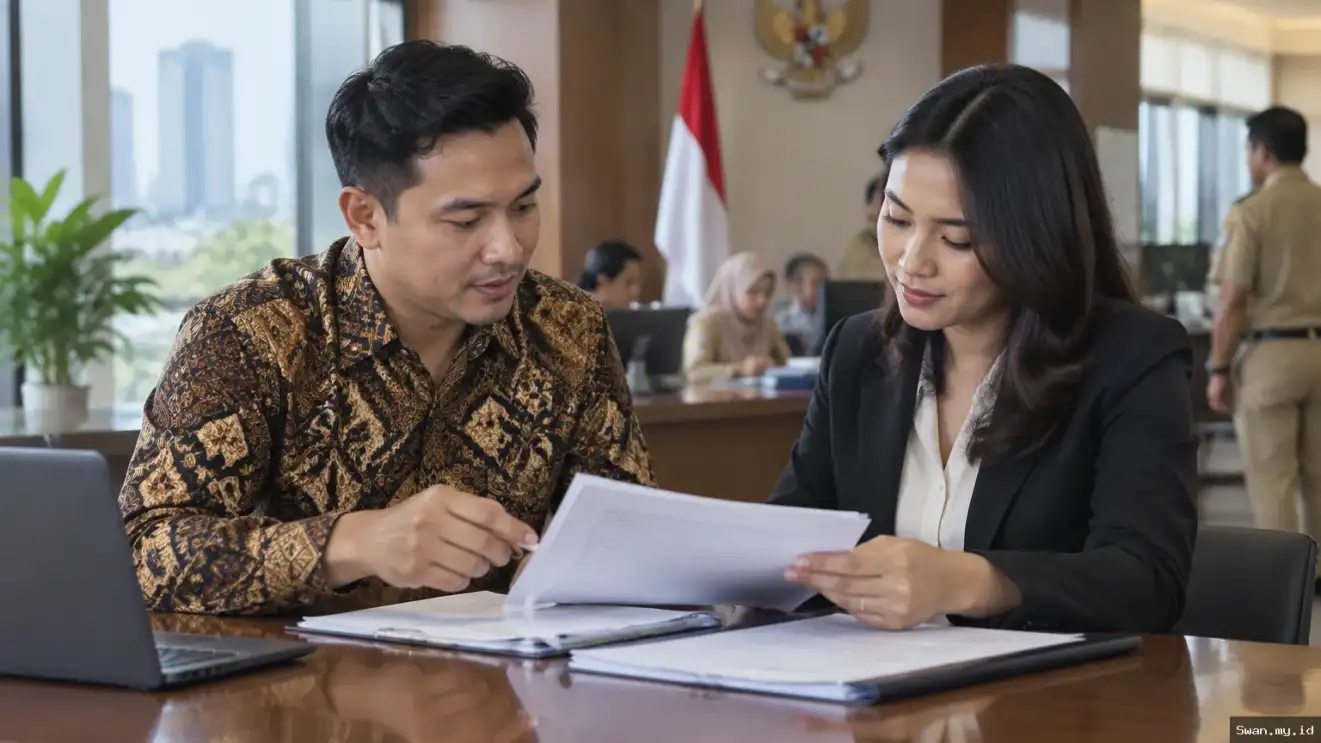
Swan.my.id - Indonesia’s Financial Services Authority, known as OJK, says it has not discussed the government’s proposal to let cooperatives distribute salaries to civil servants and pay pensions. The idea was raised by Cooperatives Minister Ferry Juliantono, but key details—including how payments would work—have not been established. OJK banking supervision chief Dian Ediana Rae said coordination would be needed if the proposal moves forward.
OJK has not discussed the proposal with the government
Dian told reporters at the House of Representatives in Jakarta on October 7, 2026, that OJK had not held talks with the government about using cooperatives for salary and pension payments. She said she did not yet know what arrangement officials might pursue and suggested the relevant parties could coordinate later.
Her comments indicate that the proposal is not yet a settled payment policy from the regulator’s perspective. The government would need to clarify how it intends to involve cooperatives and what role, if any, banks would continue to play. Dian did not describe an agreed framework, timetable or operational plan.
Payment arrangements remain unclear
For now, banks handle the intermediary services and payment systems used to distribute civil servants’ salaries. Dian noted that banks have broad networks capable of reaching locations across the country. Any shift to cooperative involvement would therefore require careful consideration of how payments could be delivered and managed in practice.
One major unanswered question is whether cooperatives would manage their own accounts or use banking services to make the payments. Dian said OJK did not yet know which option the government might choose, or how a cooperative-based arrangement would be structured. The distinction matters because the proposal’s practical design would determine how funds move from the government to recipients.
Dian did not provide a detailed response when asked whether cooperatives’ involvement could create competition with banks to attract funds. Instead, she stressed that the decision on how to pay civil servants rests with the government. OJK’s position, as described by Dian, is that the regulator has not yet been part of discussions on the proposal.
Efficiency will be an important consideration
Dian said officials should assess whether using cooperatives would make payments more efficient. The proposal’s intended benefits would need to be weighed against the realities of delivering salaries and pensions across the country. She cautioned that it was not yet possible to say whether the arrangement would improve efficiency or make the process less efficient.
That assessment would depend on the model eventually selected and the ability of the institutions involved to carry it out. The source material does not set out criteria for such an assessment, nor does it identify which public bodies would lead any operational review. For now, OJK’s comments underline that the details remain open rather than confirming a change to the existing system.
Minister says plan is being discussed
Ferry Juliantono introduced the idea during a public discussion in Jakarta on October 5, two days before Dian’s remarks. He said he was discussing with the finance minister how cooperatives could become service units for paying civil servants’ salaries and pensions. His statement presented the plan as an ongoing discussion, not as a system that had already been launched.
Ferry framed the proposal as part of a wider effort to expand the services cooperatives can offer and strengthen their role in the financial lives of the public. He also said that expanding their functions could help them compete with banks. However, OJK’s comments show that the regulator had not yet discussed the specific salary-payment proposal with the government at the time Dian spoke.
Cooperative oversight is also part of a wider reform plan
Ferry linked the proposal to a bill on cooperatives being discussed with the House of Representatives. The government has proposed creating a dedicated cooperative supervisory authority outside OJK. It has also proposed protecting cooperative members’ savings through the Indonesia Deposit Insurance Corporation, known as LPS.
These proposals concern the broader institutional framework for cooperatives. They should not be confused with a confirmed decision to transfer civil servant payments to them. The article provides no details on the bill’s final wording, the timing of its passage or how the proposed supervisory and deposit-protection arrangements might operate.
Existing rules cover salary payments
Payments to civil servants and pensioners already have a regulatory reference: Finance Ministry Regulation No. 11/PMK.05/2016 on salary distribution through accounts belonging to civil servants, Indonesian National Armed Forces personnel and police members. The proposal to involve cooperatives would therefore need to be considered alongside the existing rules and the payment arrangements used by banks.
Neither Ferry’s remarks nor Dian’s comments set out how the current regulation would change, if at all. No replacement procedure, cooperative eligibility requirements or account-handling rules were described in the available information. Those questions remain relevant if the government decides to pursue the plan, but they cannot yet be answered from the public statements cited.
What is known—and what is not
At this stage, the known points are limited: the cooperatives minister has discussed the concept with the finance minister, and OJK says it has not yet held discussions with the government about it. Banks currently provide the intermediary and payment-system services, while the government would make the decision on any future payment arrangement.
The proposal could broaden the role of cooperatives, but its feasibility will depend on details that remain undecided. How payments would be processed, whether cooperatives would use their own accounts or banks, and whether the model would be efficient are all open questions. Until the government clarifies its plans and relevant parties coordinate, the idea remains a proposal rather than a confirmed change to how civil servants receive salaries and pensions.
