

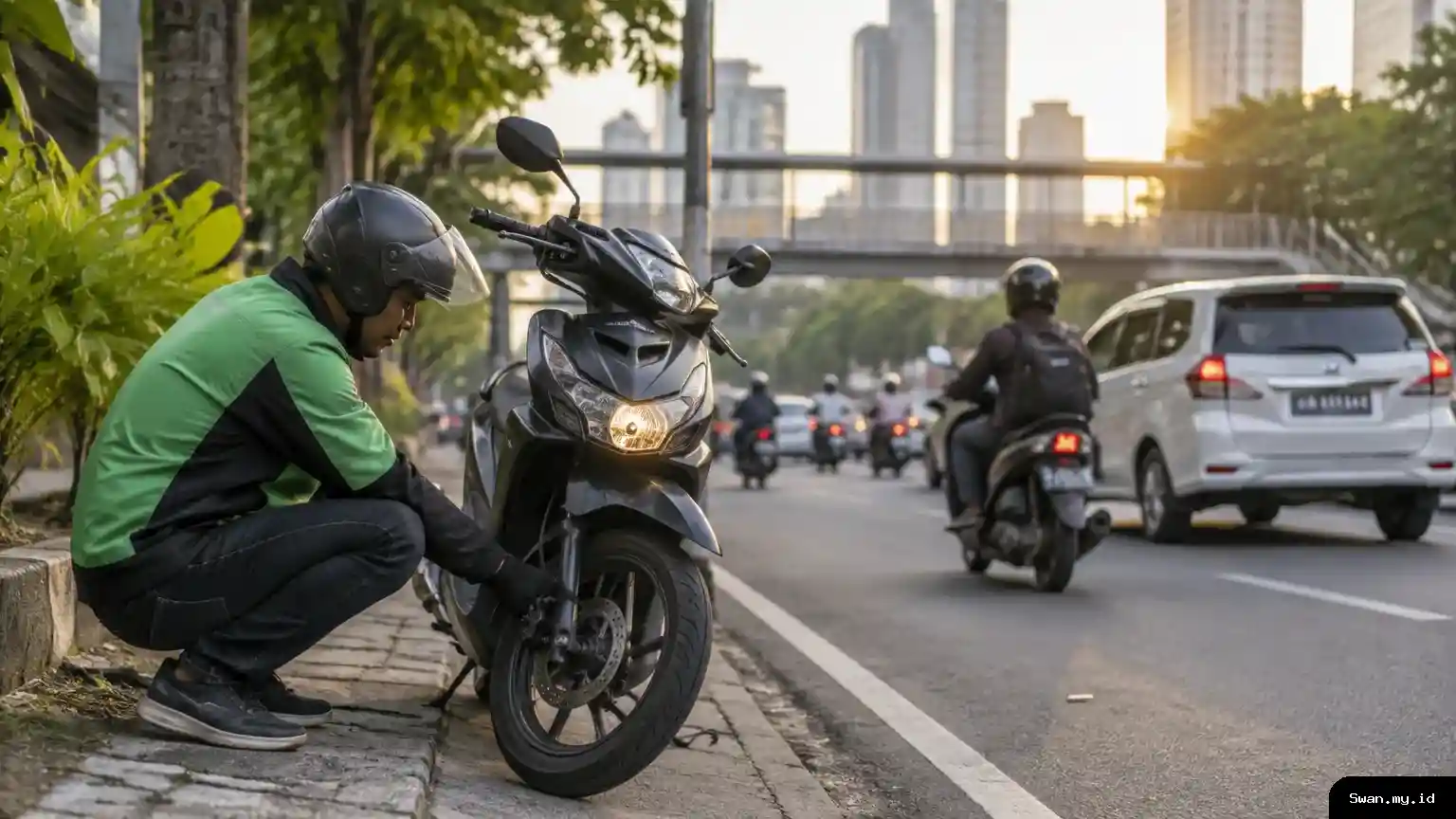
Swan.my.id - Online transport rules in Indonesia are set to become part of a planned revision to the country’s Road Traffic and Transportation Law. The Ministry of Transportation says the framework should provide legal certainty while addressing safety and the interests of drivers, app companies and passengers.
Transportation Minister Dudy Purwagandhi announced the plan in Jakarta on Sunday, October 11, 2026. The government is discussing amendments to Law No. 22 of 2009 through a draft bill on the law’s third revision. Officials hope to complete the process in 2026, allowing the new provisions to take effect in 2027.
Online transport rules in Indonesia enter the law revision
The proposed changes respond to the widespread use of app-based services for passenger journeys and deliveries. According to Dudy, regulations need to keep pace with services that have become part of everyday life. Without a clearer framework, he said, oversight could become difficult and disputes could arise.
The government has agreed to a proposal from the House of Representatives to add a new Chapter XIII A to the bill. Its proposed scope includes special rental transport and limited motorcycle transport. These provisions would cover people, goods and food deliveries, according to the minister.
The plan would bring app-based services more explicitly into the road transport framework. However, the announcement does not set out every operating requirement or explain how each service category would be regulated. Those details remain part of the legislative discussion.
Safety standards would cover vehicles and drivers
Safety is a central concern in the proposed framework. The ministry says rules should apply to passenger services using both two-wheeled and four-wheeled vehicles, while protecting the public interest. Dudy said safety requirements would need to address vehicle condition as well as the equipment drivers use.
That approach could make safety a shared responsibility rather than an issue left solely to individual drivers. The ministry plans to encourage app companies to help ensure that vehicles used by their driver partners meet the required standards. The announcement does not specify a final inspection schedule or list particular equipment requirements.
Oversight could include checking vehicle condition, confirming that safety equipment is available and supporting driver training. The ministry also cited sanctions for parties that violate the rules. Together, these measures are intended to give regulators practical ways to monitor compliance, although the bill still needs to establish the precise procedures.
For passengers, clear standards could offer a more consistent basis for assessing safety across app-based journeys. For drivers, requirements would need to be understandable and workable in daily operations. The government has said it will consider these interests as it develops the provisions.
App companies and drivers would share oversight responsibilities
The ministry sees cooperation among government, app companies and drivers as necessary to supervise online transport. Each group has a different role: authorities set and oversee the rules, platforms connect services with users, and drivers operate the vehicles. The proposed framework aims to make those responsibilities clearer.
Journey records and monitoring systems are another part of the ministry’s approach. Officials say app-based transactions need adequate records so trips can be traced. Better traceability, in turn, could support safety oversight and accountability when authorities need to review a service or journey.
The statement does not describe what data platforms would have to record, how long they would retain it or who could access it. Those questions will matter as lawmakers shape the detailed provisions. For now, the ministry has identified recordkeeping and monitoring as tools that could support supervision.
Rules must account for the wider transport ecosystem
The government says regulation should protect service users without overlooking driver partners or the industry’s ability to continue operating. That balance matters because stricter requirements may affect several parts of the service, from vehicle readiness to platform operations. The ministry says it will consider industry conditions and driver protection alongside passenger safety.
It also wants app-based transport to remain accessible and affordable for the public. The announcement does not set out proposed fares, driver earnings, platform charges or other commercial terms. Instead, officials have described a broader aim: develop rules that support safe, sustainable services while accounting for the needs of the people who rely on them.
This leaves substantial policy details to be settled during the bill’s development. The challenge will be to turn broad goals into requirements that authorities can enforce and companies and drivers can follow. Consultation and coordination among the parties will therefore remain important as the legislative process continues.
2026 completion is the government’s target
The revision is included in the 2026 National Legislation Program, and Dudy said the government wants to finish it as soon as possible. He expressed hope that the bill would be completed during 2026 so implementation could begin in 2027. That timetable is a target, not confirmation that the revised law has already been enacted.
Until lawmakers complete the process, the planned chapter remains a proposal within the broader revision of the road traffic law. Its final wording will determine how special rental services and limited motorcycle transport are defined, what standards apply and how regulators enforce them.
For now, the government’s direction is clear: bring app-based transport into a more comprehensive legal framework, strengthen safety oversight and involve platforms in compliance. The final rules will need to reconcile those aims with driver protections, industry sustainability and the public’s demand for convenient transport and delivery services.
