

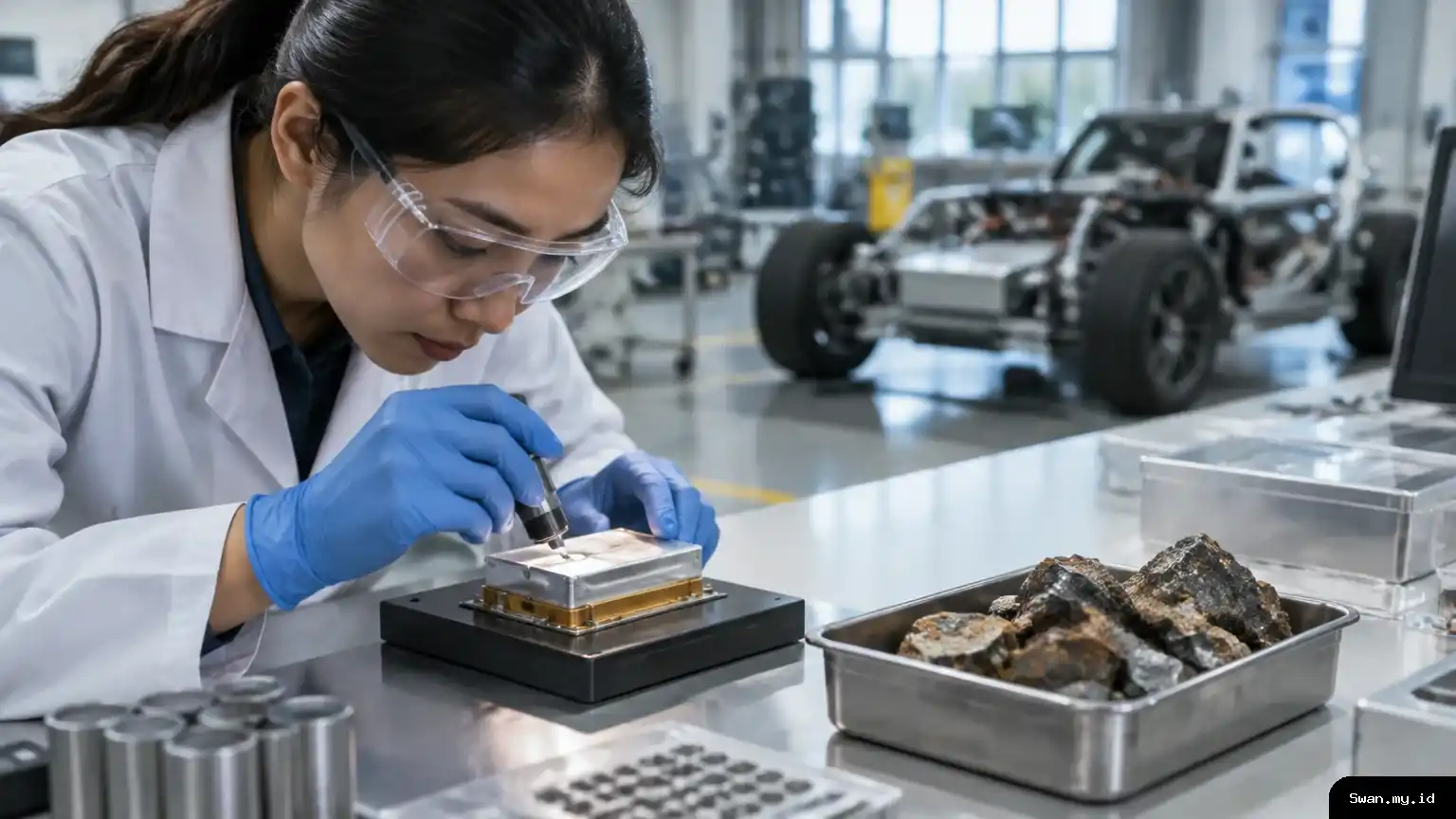
Swan.my.id - Solid-state batteries in Indonesia could offer a route beyond supplying materials and assembling electric vehicles. Periklindo says the emerging technology deserves attention while the country builds its electric-vehicle (EV) ecosystem, particularly because the batteries could use nickel. But seizing that opportunity will take more than factory investment: research and development (R&D) must also receive a stronger place in industrial policy.
Indonesia has encouraged EV adoption through incentives, including tax reductions and purchase subsidies. At the same time, downstream investment has focused attention on domestic nickel and manufacturing. Those efforts can strengthen production, yet they do not automatically give local companies the ability to design battery technologies or own the knowledge behind them.
Why solid-state batteries matter to Indonesia’s EV plans
Solid-state batteries replace the liquid electrolyte found in conventional lithium-ion batteries with a solid material. The technology has attracted attention because it may deliver higher energy density and improved safety compared with conventional batteries. For EVs, higher energy density could make battery performance a key advantage, although commercial development and production remain important challenges.
Prabowo Kartoleksono, Periklindo’s deputy chair for development and research, has argued that Indonesia should consider entering this field while the technology is still developing. He said the latest battery technology, solid-state batteries, can use nickel. That potential connection matters to a country seeking to build more value around its nickel resources.
Prabowo described solid-state technology as a promising answer for the industry, citing its potential for high energy density and safety. He also made a strong claim about fire risk. That statement reflects his view of the technology’s promise, rather than a guarantee that every battery or vehicle using it would be free from fire risk.
Nickel is an opening, not a complete strategy
Nickel can form part of the country’s industrial advantage, but access to a relevant raw material does not by itself establish leadership in battery technology. Companies also need expertise in materials, engineering, testing, production processes and product design. Without those capabilities, a country can participate in a supply chain while depending on others for the most valuable technical decisions.
That distinction helps explain why Periklindo’s argument extends beyond battery factories. Indonesia can attract manufacturing and support EV assembly, yet still miss the opportunity to create technology locally. If domestic firms mainly execute production plans developed elsewhere, the country’s role may remain narrower than its industrial ambitions.
Meanwhile, battery technologies continue to evolve. A timely commitment to research could help Indonesian institutions and businesses build relevant knowledge as the field develops. However, investment in research does not guarantee a commercial breakthrough. It creates a foundation for local teams to learn, test ideas and take part in future decisions.
Periklindo questions the weight given to R&D
Prabowo’s central concern involves the way local-content rules value research. He said that under a proposed TKDN, or domestic content level, of 60 percent, R&D would account for only 10 percent of the assessment. In his view, that weighting gives research too little recognition compared with physical manufacturing activity.
The concern is about incentives as much as measurement. When policy places greater emphasis on factory output and local components, companies may have a stronger reason to expand production than to fund research. A small R&D share could therefore limit the reward for developing technology and expertise within Indonesia.
Prabowo warned that the country could remain an assembly base rather than becoming a designer or specialist producer. His description of Indonesia as being kept in a “tailor” role expresses a broader fear: domestic industry might put together products without controlling the design or intellectual property behind them.
From assembling EVs to developing technology
Manufacturing still matters. Production sites can support jobs, suppliers and a growing EV ecosystem. But manufacturing and research serve different purposes. Factories build products at scale, while R&D helps develop the methods, materials and designs that shape what those products become.
For that reason, Indonesia’s EV ambitions need a balance between physical capacity and technical capability. Incentives can encourage companies to build locally, but their design also influences whether firms invest in local research. A stronger recognition of R&D could help connect industrial growth with the development of expertise and intellectual property.
This does not mean that every company must develop a new battery independently. It does mean that local researchers, manufacturers and businesses need opportunities to contribute to the technology. Collaboration and learning can matter alongside production, especially when the industry is exploring battery systems that differ from established designs.
What a stronger research focus could change
Giving R&D greater weight in domestic-content policy would signal that innovation matters alongside local production. It could encourage businesses to treat research as part of their industrial plans rather than an optional activity. The exact policy approach remains a decision for policymakers, but Periklindo’s criticism points to a clear issue: the rules can shape what companies choose to build and develop.
Indonesia’s nickel resources and EV incentives provide important context for the debate. Still, neither resource access nor subsidies alone can secure a leading position in a changing battery market. A lasting role depends on whether domestic participants can build knowledge, participate in design and support the development of new technologies.
Solid-state batteries are not a guaranteed shortcut to that outcome. Their potential makes them worth watching, while technical development and commercial readiness will determine how the market evolves. For Indonesia, Periklindo’s message is that the country should consider the opportunity now and give research a more meaningful place in its EV strategy.
