

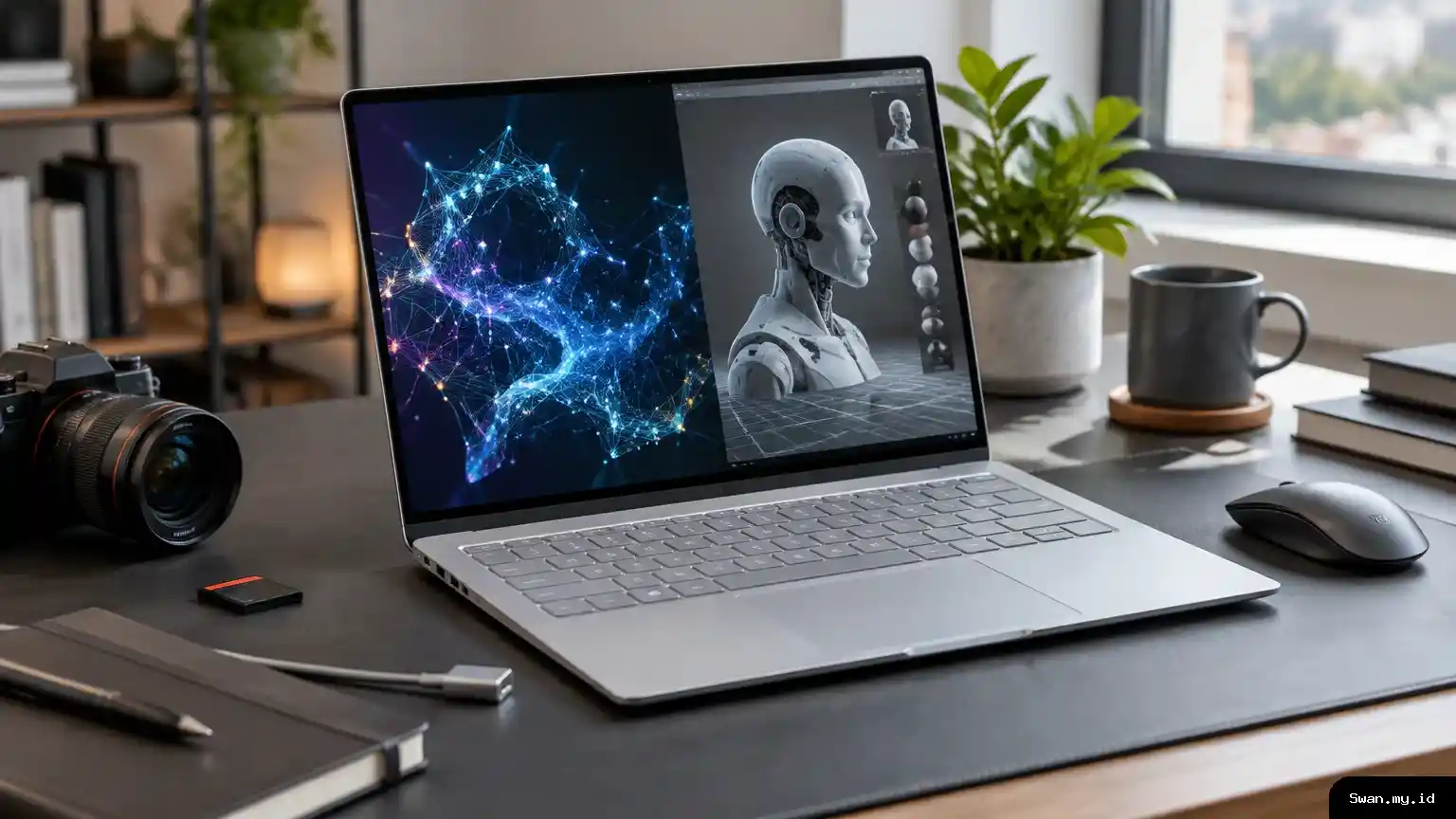
Swan.my.id - The Surface Laptop Ultra brings NVIDIA-powered local AI computing to a premium Windows laptop. Microsoft has equipped it with an RTX Spark superchip, up to 128GB of unified memory, and a 15-inch mini-LED touchscreen. Pre-orders are open, with shipments scheduled to begin on October 16, 2026.
The starting price is US$2,599.99 before tax, placing the machine well above the reach of many everyday laptop buyers. Instead, Microsoft is pitching it as a portable option for developers, researchers, and creative professionals who want to run demanding AI workloads without relying entirely on cloud services.
Surface Laptop Ultra centers on NVIDIA RTX Spark
Unlike earlier Surface Laptop models, this device uses NVIDIA’s RTX Spark superchip, which combines a Grace Arm CPU with a GPU based on the Blackwell architecture. Microsoft lists 18-core and 20-core configurations. The top GPU option has 6,144 CUDA cores, while another configuration has 5,120.
Unified memory ranges from 24GB to 128GB, and Microsoft claims AI performance of up to one petaflop in FP4. The CPU and GPU share that memory pool, which can help the system handle large models locally. Microsoft says the laptop can run models with as many as 120 billion parameters, though actual performance will depend on the model and workload.
CUDA support could also appeal to developers already working with NVIDIA’s AI tools. They can use familiar software and workflows rather than moving to a different hardware ecosystem. However, this advantage matters most to users whose applications support the platform and make effective use of its available memory and compute power.
Microsoft’s performance claims still need independent testing
Microsoft says the Surface Laptop Ultra can produce an initial response from a language model and generate images faster than a laptop equipped with Apple’s M5 Pro. The company has not released detailed benchmark figures or identified the models used for those comparisons. As a result, independent testing will be important before buyers can judge the size of the advantage.
Microsoft also demonstrated a creative workflow using local AI models alongside ComfyUI, Blender, and Unreal Engine. The company said tasks that previously took days could be completed in hours. That remains a Microsoft claim, but it illustrates the type of production work the laptop is designed to support.
The company describes its approach as “Hybrid Intelligence.” In this setup, the laptop handles tasks locally when possible, while cloud computing can provide extra capacity when a job needs it. This gives professionals another option, although workloads that use cloud services may still depend on an internet connection and the services involved.
Gaming and creative work share the same hardware
The laptop is not limited to AI demonstrations. In a Microsoft demo, Gears of War ran at 60 frames per second while GitHub Copilot work and DaVinci Resolve mastering ran at the same time. Microsoft also says hundreds of AAA and indie games will support RTX Spark from launch.
Call of Duty is expected to arrive on the platform in 2027. Still, the chip’s Arm architecture makes compatibility worth checking, especially for buyers who depend on specific games or desktop applications. Support for a title does not guarantee identical performance across every game or configuration.
A bright 15-inch screen and a broader port selection
The touchscreen measures 15 inches and uses a mini-LED PixelSense Ultra panel with a 3:2 aspect ratio and 262 pixels per inch. Microsoft rates peak HDR brightness at up to 2,000 nits. That combination could suit detailed creative work, while the taller screen shape offers more vertical room for documents and timelines.
Microsoft says the haptic touchpad is more than 30% larger than the one on the 15-inch Surface Laptop seventh edition. Ports include three USB-C connections, USB-A, HDMI, a full-size SD card reader, and a 3.5mm headphone jack. One USB-C port also supports Magnetic Connect charging, letting a magnetic connector attach without giving up USB-C functionality for other uses.
The company claims the cooling system has up to 2.5 times the thermal capacity of the previous 15-inch model. It also says performance on battery remains above 99% of plugged-in performance. Those figures will need real-world testing, particularly during sustained workloads that put pressure on the CPU and GPU.
Configurations and US prices
All listed prices are in US dollars and exclude tax. Storage options include 512GB, 1TB, and 2TB SSDs; Microsoft says users can replace the SSD, which may let some buyers choose a smaller drive initially and upgrade later.
- 18-core CPU, 24GB memory, 512GB SSD: US$2,599.99
- 18-core CPU, 24GB memory, 1TB SSD: US$2,999.99
- 18-core CPU, 32GB memory, 1TB SSD: US$3,299.99
- 20-core CPU, 32GB memory, 1TB SSD: US$3,699.99
- 20-core CPU, 48GB memory, 1TB SSD: US$3,999.99
- 20-core CPU, 64GB memory, 1TB SSD: US$4,299.99
- 20-core CPU, 64GB memory, 2TB SSD: US$4,699.99
- 20-core CPU, 128GB memory, 1TB SSD: US$5,899.99
At an assumed exchange rate of Rp17,920 per dollar, the highest configuration works out to roughly Rp100 million before taxes and import costs. That is only an estimate, not a confirmed local retail price. The laptop weighs under 2kg, measures less than 18mm thick, and comes in Platinum or Nightfall, with Windows 11 Home or Pro.
Who should consider the Surface Laptop Ultra?
The price and hardware point to a specialist audience rather than general-purpose users. AI developers, researchers, and creators who regularly work with large local models may value the combination of CUDA support, high memory capacity, and portable design. For those users, the central question is whether their particular software and models can take full advantage of RTX Spark.
For everyone else, a less expensive laptop may make more sense. Microsoft is presenting an alternative to high-end MacBook Pro systems for people who want Windows and NVIDIA’s developer ecosystem. Yet its speed comparisons remain unverified, and Arm compatibility deserves attention. If independent tests confirm the performance and everyday support meets buyers’ needs, the Surface Laptop Ultra could offer a compelling way to bring substantial local AI computing into a laptop.
