

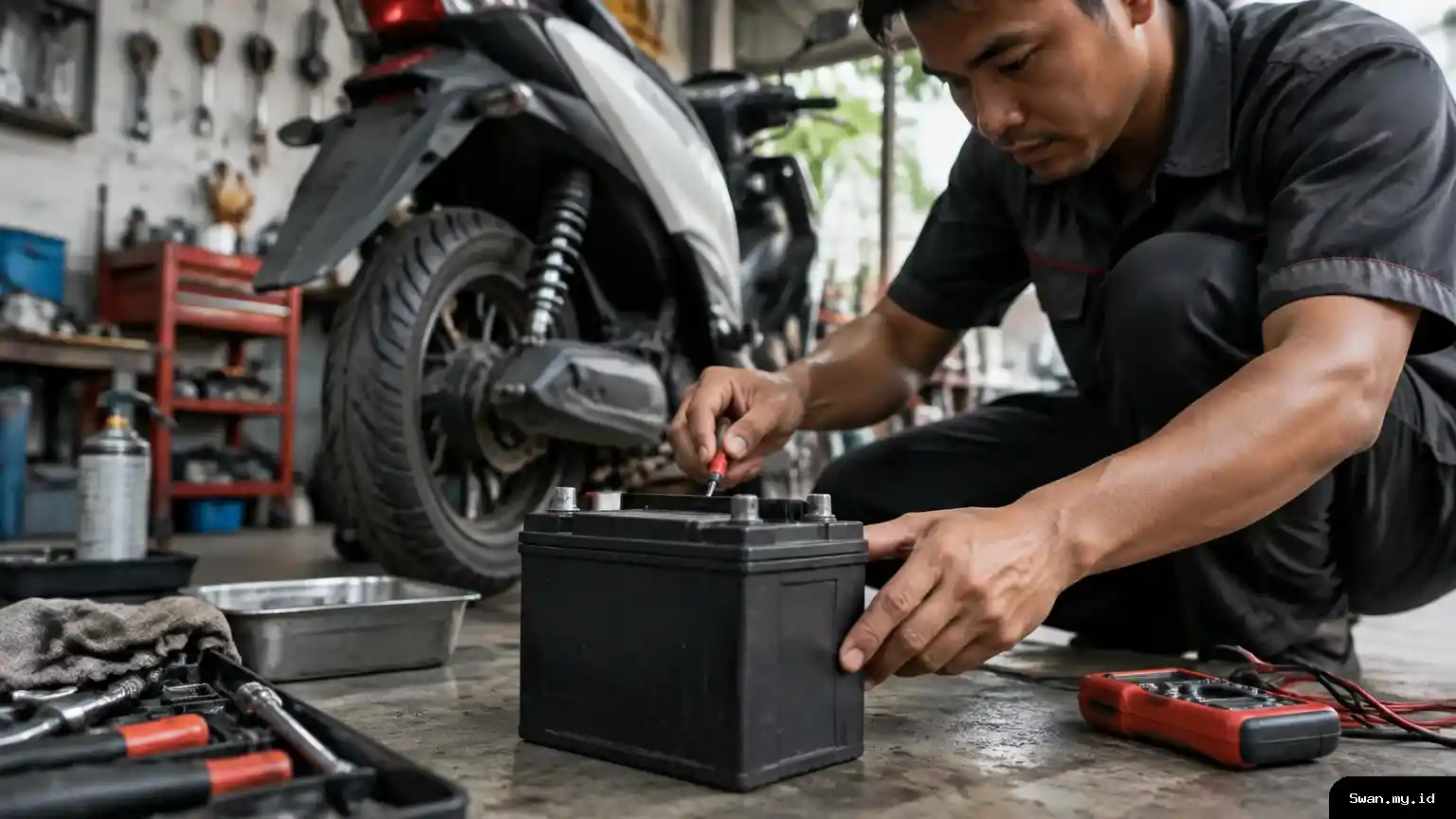
Swan.my.id - An SLA battery for electric motorcycles offers a relatively affordable way to power some electric two-wheelers. The sealed lead-acid type is also widely available, making it easier for owners to find than some alternatives. Yet its lower initial cost comes with trade-offs, especially a shorter service life and limited performance.
Those factors shape how useful an SLA pack will be in everyday riding. Before choosing a motorcycle that uses one, it helps to understand what the battery does, what maintenance it needs, and how its lifespan can affect ownership.
Why an SLA battery for electric motorcycles appeals to buyers
Price is one of the clearest advantages. Hernest, owner of the Battery Electric Motion (BEMo) electric motorcycle workshop in Bogor, West Java, says SLA batteries are inexpensive and easy to purchase. He also notes that a newly bought battery can be used straight away.
That accessibility can make this type a practical option for buyers who want a straightforward entry into electric transport. Availability may also make replacement less difficult when a battery reaches the end of its useful life. However, an affordable purchase price does not by itself show how much a battery will cost over time.
Owners should weigh the upfront saving against the possibility of replacing the pack sooner than expected. The right choice depends on how the motorcycle will be used and what its owner expects from its range and performance. In other words, price is only one part of the decision.
How sealed lead-acid batteries work
SLA stands for Sealed Lead Acid. The technology shares its basic lead-acid chemistry with conventional vehicle batteries, but an electric motorcycle uses the pack as its main source of energy for propulsion. It is not simply there to start an engine or run electrical accessories.
Inside the battery, a chemical reaction involving lead electrodes and electrolyte produces electrical energy. That energy powers the motorcycle’s electric motor. The “sealed” design refers to the electrolyte being contained within a closed case.
As a result, an SLA battery does not require routine water top-ups like some conventional lead-acid batteries. That does not make it maintenance-free, however. Owners still need to charge it according to the battery’s specifications and follow appropriate care practices.
Shorter lifespan is a key trade-off
For many buyers, the main drawback is the battery’s limited service life. Hernest says an SLA battery generally lasts about one to two years, depending on its condition and how it is used. He describes two years as roughly the maximum lifespan.
Battery life also connects to charging and discharging cycles. Each use draws on stored energy, and the battery’s ability to retain energy can decline over time. Consequently, a motorcycle may cover less distance as its battery loses capacity.
That change can affect daily routines, particularly when riders rely on a predictable travel range. A battery that no longer performs as needed may require attention or replacement. Hernest says balancing may help in some cases, but if it cannot resolve the problem, the battery needs to be replaced.
It is important not to treat balancing as a guaranteed way to restore an ageing pack. The workshop owner describes it as a possible measure when a battery’s condition can still be addressed. Once it cannot, replacement becomes necessary.
What to consider before choosing one
Start by matching the battery type to the way you plan to ride. A lower purchase cost may suit someone prioritising affordability, while riders who need consistent performance should consider the stated limits and likely replacement interval. Check the motorcycle’s battery specifications before buying or charging a replacement.
It also helps to think beyond the first purchase. A pack that lasts around one to two years may mean planning for another battery during ownership. Actual longevity varies with condition and use, so the estimate should guide expectations rather than serve as a promise.
Ask a qualified workshop to assess a battery when performance drops. Since reduced energy storage can shorten riding distance, noticing a change early can help owners understand whether the pack needs attention. Avoid assuming that a single adjustment will solve every battery problem.
A practical option with defined limits
SLA batteries combine accessible pricing with a familiar lead-acid design. Their sealed construction also removes the need for routine water additions associated with some other lead-acid batteries. For buyers seeking a simple, readily available option, those strengths can be meaningful.
Still, an electric motorcycle depends on its battery for movement, so lifespan and performance deserve close attention. The typical one-to-two-year service life, finite charging and discharging cycles, and possible decline in range are important compromises. Understanding them helps riders decide whether the initial saving fits their priorities.
Ultimately, an SLA battery is not automatically the right or wrong choice for every electric motorcycle. Its value depends on the buyer’s budget, riding needs, and willingness to account for replacement. Careful charging and realistic expectations can help owners make a more informed decision.
