

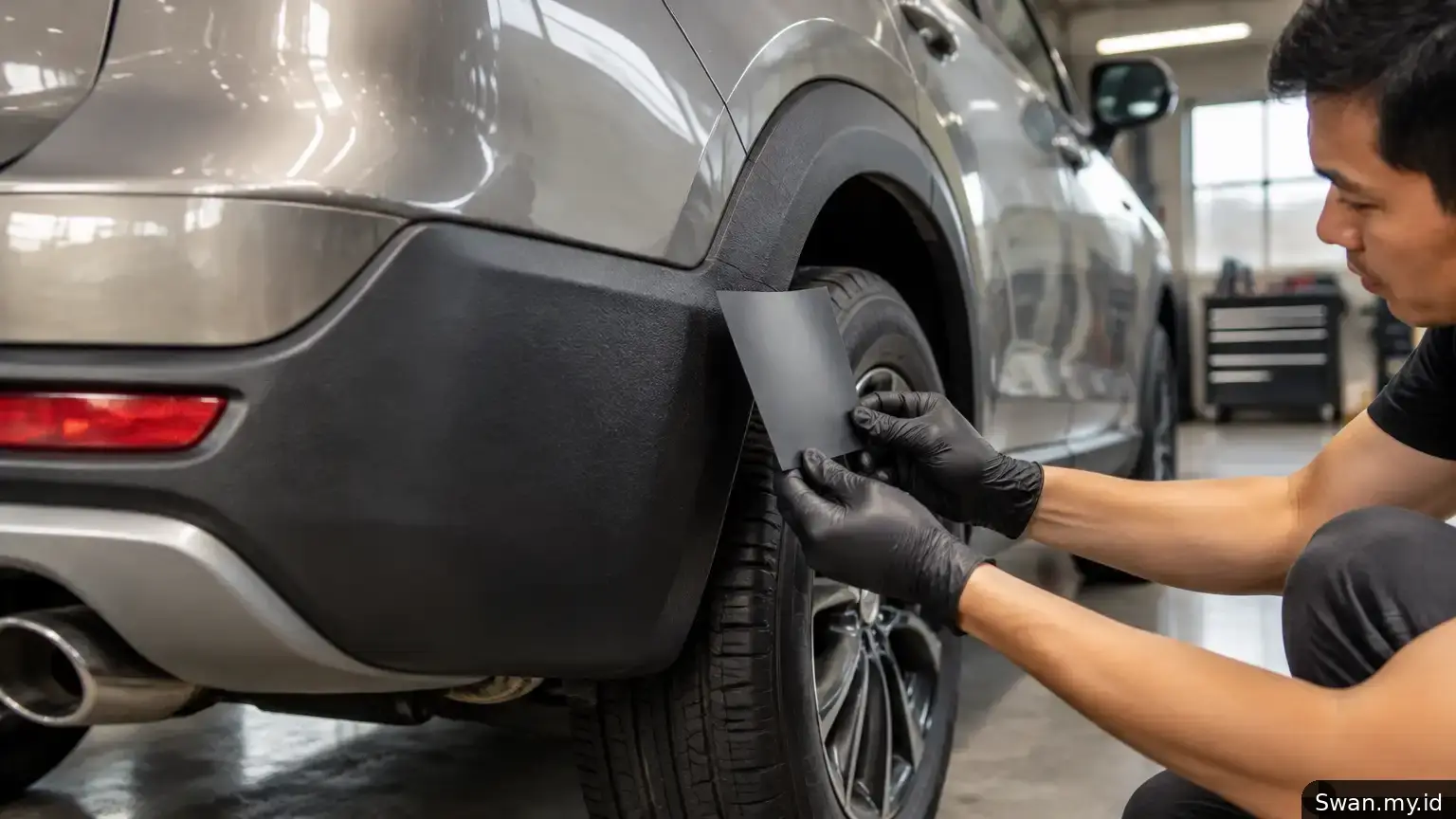
Swan.my.id - Car stickers can change a vehicle’s appearance without a full repaint, but the choice of panel matters. Rough plastic parts, including some lower bumpers and over fenders, can make it harder for adhesive to hold securely. On these surfaces, a sticker may lift and peel sooner than it would on smooth, painted bodywork.
Agus, owner of Dro'i Sticker Kemayoran, told Kompas.com on Monday, November 2, 2026, that textured plastic does not provide the same grip as a smooth panel. His advice is especially relevant to SUV owners, whose vehicles often include exterior plastic trim with a coarse finish.
Why car stickers struggle on textured plastic
A sticker adheres best when its adhesive can make close contact with the surface beneath it. A coarse, uneven finish interrupts that contact, so the adhesive may not hold as firmly across the panel. Even if an installer can apply the material, installation alone does not guarantee a durable result.
Dro'i draws a distinction between smooth and rough parts. He said a smooth diffuser can hold a sticker well, while a rough-textured area presents a different challenge. The material may appear to sit correctly at first, yet its edges can begin to lift when the surface does not offer enough consistent contact.
That distinction matters because plastic components do not all share the same finish. A vehicle may have smooth painted panels alongside textured trim, even within the same general area. Therefore, owners should assess the actual surface rather than assume every bumper or exterior piece will accept a sticker equally well.
Lower bumpers and over fenders need caution
Dro'i advises against applying stickers to rough plastic sections such as lower bumpers and over fenders. These parts often have a coarse texture, which makes it harder for the adhesive to attach evenly. As a result, the sticker’s edges can lift and the material can eventually peel away.
Some customers still request installations on those areas after hearing about the risk, he said. In such cases, the result may last only around three months before the sticker comes loose. That estimate comes from Dro'i’s experience with these difficult surfaces; it should not be treated as a guaranteed lifespan for every vehicle or installation.
Consequently, choosing a rough panel can mean paying for work that needs repeating much sooner than expected. The sticker may look acceptable immediately after installation, but its initial appearance does not show how well it will remain attached over time. Owners should weigh that uncertainty before committing to a design that covers textured trim.
Smooth painted panels are a safer choice
For a more suitable location, Dro'i recommends smooth body panels such as the hood and doors. Their painted surfaces provide a more consistent base for stickers than coarse plastic does. Other smooth exterior areas may also be appropriate, provided the material and condition of the specific panel suit the planned application.
However, “smooth” does not mean every surface should receive the same product. Lamp covers, for example, may use a dedicated film designed for the material. Dro'i notes that some other components, including lamp lenses, can be covered with a suitable film, so owners should confirm what product matches each part.
Before choosing a location, inspect the finish closely and ask the installer to assess it. If the panel feels or looks rough, ask directly whether the adhesive can hold there and what lifespan to expect. A clear answer helps set realistic expectations before the work begins.
Sticker and paint work both depend on preparation
Textured plastic can also pose a challenge when owners consider changing a panel’s colour with paint. Dro'i says painting rough plastic requires particular attention. Without suitable surface preparation and coating materials, paint can also peel.
That does not mean a sticker and a paint job behave in exactly the same way. Rather, both choices depend on the panel’s material and finish. A modification plan should account for those characteristics instead of treating every exterior component as a simple, interchangeable surface.
Owners can discuss the intended finish with a professional before selecting either option. In particular, they should identify which panels have textured plastic, which have smooth paint, and whether a component needs a product made for its material. This conversation can help prevent a mismatch between the chosen treatment and the surface.
A practical check before installation
A few questions can help owners make a more informed decision:
- What is the panel made of? Identify whether the area is painted bodywork, smooth plastic, or rough-textured plastic.
- How does the surface feel? Check for a coarse or uneven finish, especially on lower bumpers and over fenders.
- Is the product suitable? Ask whether the sticker or film is intended for that particular material, including lamp covers.
- What should you expect? Ask the installer to explain the adhesion risk and likely durability for the chosen location.
These checks cannot guarantee that a sticker will never peel. They can, however, help owners avoid placing ordinary sticker material on a surface that an experienced installer considers unsuitable. If the main goal is a lasting change, selecting a compatible, smooth panel is generally a more sensible starting point.
Choose the surface before the design
It is easy to focus first on colour, pattern, or coverage. Yet the panel’s surface can determine whether the finished look lasts. Rough plastic on a lower bumper or over fender presents a greater risk of peeling, while smooth painted areas such as the hood and doors offer a more suitable base, according to Dro'i.
Before installation, match the product to the component and ask about any limits. A careful choice can help avoid an early repeat job and keep the modification aligned with the vehicle’s materials. In short, the best place for a car sticker is not simply the most visible panel; it is a panel whose surface can support it.
